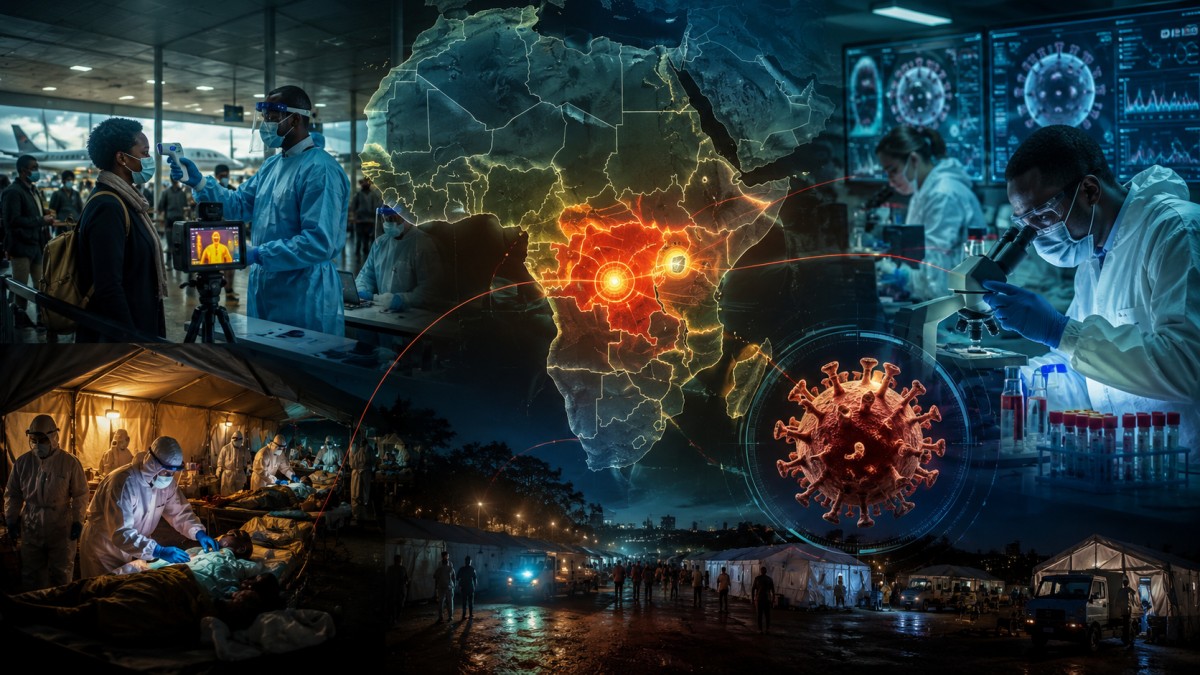
WHO Declares Ebola Outbreak a Global Health Emergency as Cases Rise in Congo and Uganda
The World Health Organization has officially declared the ongoing Ebola outbreak in the Democratic Republic of the Congo and Uganda a Public Health Emergency of International Concern (PHEIC), raising global alarm over the rapid spread of the deadly virus and the challenges posed by a rare Ebola strain for which no approved vaccine currently exists.
The declaration came after health authorities confirmed rising numbers of infections, suspected deaths, and growing fears that the outbreak may already be spreading beyond currently identified areas.
According to health officials, the outbreak is linked to the Bundibugyo strain of the Ebola virus — a rare variant that has historically caused smaller outbreaks but remains highly dangerous due to the absence of targeted vaccines and treatments.
Ebola Cases and Death Toll Continue to Rise
As of May 16–17, 2026, authorities in the Democratic Republic of the Congo reported:
- 8 laboratory-confirmed Ebola cases
- Around 246 suspected infections
- Nearly 80 suspected deaths
Meanwhile, Uganda confirmed two Ebola cases, including one death in the capital city of Kampala. Health experts say the Ugandan cases reportedly had no direct known connection to Congo’s outbreak zones, increasing concerns about hidden transmission chains that may not yet be detected.
WHO warned that the actual number of infections could be significantly higher because many cases in remote areas may remain unreported or undiagnosed.
Outbreak Concentrated in Eastern Congo
The outbreak is primarily centered in Congo’s northeastern Ituri Province, particularly in the following regions:
- Bunia
- Rwampara
- Mongwalu
These areas face major humanitarian and healthcare challenges, including armed conflict, population displacement, and weak medical infrastructure, all of which make Ebola containment far more difficult.
Health officials fear that insecurity in eastern Congo could slow contact tracing operations and delay treatment for infected individuals.
Why the Bundibugyo Ebola Strain Is Especially Concerning
Unlike the Zaire Ebola strain — which has approved vaccines and several treatment options — the Bundibugyo strain currently has:
- No approved vaccine
- No approved targeted antiviral treatment
WHO described the outbreak as “extraordinary” because traditional Ebola response tools are more limited against this rare strain.
Medical experts estimate the fatality rate of the Bundibugyo Ebola strain between 25% and 40%, depending on access to treatment and speed of detection.
The situation has become even more alarming after reports that four healthcare workers are among the suspected deaths, highlighting concerns over infection prevention measures inside hospitals and clinics.
How Ebola Spreads
Health authorities emphasized that Ebola does not spread through the air like COVID-19.
The virus spreads primarily through:
- Direct contact with infected blood or body fluids
- Contact with contaminated surfaces or materials such as bedding, clothing, or needles
- Exposure to infected dead bodies during burial rituals
Because Ebola transmission requires close physical contact, experts say rapid isolation and contact tracing remain highly effective tools for limiting outbreaks.
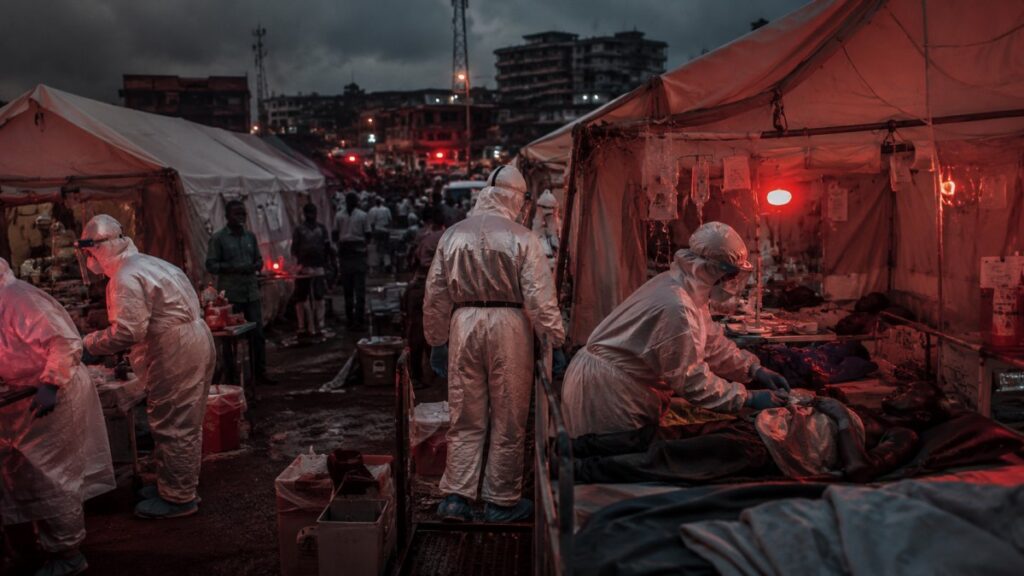
Common Ebola Symptoms
Symptoms of Ebola can appear suddenly and may initially resemble other infectious diseases.
Common symptoms include:
- Fever
- Severe muscle pain
- Weakness and fatigue
- Vomiting
- Diarrhea
- Skin rash
As the disease progresses, some patients may develop internal bleeding, organ failure, and shock.
Health officials are urging people in affected regions to seek immediate medical attention if symptoms appear after exposure to infected individuals.
Related Climate News
Scientists are warning that a potentially historic Super El Niño could develop in 2026, bringing extreme heatwaves, floods, droughts, hurricanes, and global weather disruptions. NOAA says ocean temperatures are rising faster than expected, increasing the risk of one of the strongest El Niño events ever recorded.
Read Full ReportInternational Response Intensifies
The WHO and international aid agencies are rapidly increasing emergency response operations in the affected areas.
WHO has already deployed:
- Around 7 metric tons of emergency medical supplies to Bunia
- A team of 35 Ebola response experts
At the same time, Médecins Sans Frontières is preparing a large-scale emergency intervention to support overwhelmed local healthcare systems.
The Centers for Disease Control and Prevention said the risk to Americans remains low but confirmed it is assisting with the relocation of a “small number” of affected U.S. citizens.
Additional CDC emergency teams may also be deployed from Atlanta if the outbreak expands further.
Airport Screening and Global Preparedness Measures
Health authorities stressed there is currently:
- No evidence of Ebola exposure on international flights
- Exit screening procedures active in Congo and Uganda
WHO has advised countries not to close borders or suspend trade, arguing that travel bans can disrupt humanitarian response efforts and worsen economic instability.
Instead, WHO urged governments to focus on:
- Surveillance systems
- Rapid testing
- Contact tracing
- Isolation preparedness
- Airport and border screening
Several countries have already begun strengthening monitoring efforts.
Kenya, for example, has formed a national Ebola preparedness team and increased screening measures at airports and border crossings.
Is the United States at Risk?
Medical experts say the current risk to the United States remains low, especially because Ebola requires close physical contact for transmission rather than airborne spread.
However, experts caution that infected travelers could potentially enter countries before symptoms appear, making airport screening, rapid diagnosis, and contact tracing important tools for prevention.
The Centers for Disease Control and Prevention has stated there is currently no evidence of Ebola exposure on international flights, while exit screening measures remain active in Congo and Uganda.
U.S. health authorities are expected to continue closely monitoring international travel developments and may deploy additional response teams if the outbreak expands further.
Congo’s 17th Ebola Outbreak Since 1976
This marks the 17th Ebola outbreak in Congo since the virus was first discovered near the Ebola River in 1976.
Despite the seriousness of the current outbreak, experts believe the world is better prepared today than during earlier Ebola emergencies thanks to improvements in:
- Contact tracing technology
- Rapid laboratory testing
- Emergency response coordination
- Global surveillance systems
- Public health communication
Still, infectious disease specialists warn the outbreak demonstrates how quickly dangerous pathogens can become international threats in a highly connected world.
Global Health Experts Urge Vigilance
Health experts continue to stress that panic is unnecessary, but vigilance is critical.
The combination of:
- A rare Ebola strain
- Limited vaccines
- Ongoing conflict in eastern Congo
- Cross-border movement
creates a complicated public health challenge that will require strong international cooperation.
The coming weeks are expected to be crucial in determining whether health authorities can successfully contain the outbreak before wider international spread occurs.
Disclaimer
This article is for informational and educational purposes only. Health situations can evolve rapidly, and official guidance may change. Readers should follow updates from the World Health Organization, local health authorities, and medical professionals for the latest verified information regarding the Ebola outbreak.



2 thoughts on “WHO Declares Ebola Outbreak in Congo and Uganda a Global Health Emergency Amid Fears of Wider Spread 2026”