King Charles III Addresses U.S. Congress, Champions Transatlantic Alliance Amid Diplomatic Tensions

King Charles III Addresses U.S. Congress, Champions Transatlantic Alliance Amid Diplomatic Tensions
A Royal First in Half a Century: King Charles III Takes the Capitol Stage

In a moment steeped in history, pageantry, and carefully calibrated diplomacy, King Charles III stood before a joint session of the United States Congress on April 28–29, 2026 — only the second British monarch ever to do so — and delivered a speech that was equal parts celebration, caution, and coded rebuttal.

The occasion marked the 250th anniversary of American independence, lending the visit a ceremonial grandeur that few diplomatic engagements can match. Yet beneath the gilded surface of toasts, banquets, and warm handshakes with President Donald Trump lay a far more complex diplomatic reality: the US-UK “special relationship” is, by most accounts, experiencing one of its roughest patches in decades.

“One of the Most Consequential Alliances in Human History”

Charles did not shy away from the weight of the moment. Speaking directly to members of both houses of Congress, the King described the bond between the United States and the United Kingdom as “one of the most consequential alliances in human history” — a phrase that landed with deliberate force in a room acutely aware of current transatlantic strains.

His message was clear: whatever the political turbulence of the present moment, the foundations of this alliance — shared values, shared sacrifice, shared democratic ideals — are not merely historical footnotes. They are living commitments that demand active renewal by every generation of leaders.

The speech drew on a long arc of history, reminding lawmakers of the two nations’ intertwined destinies through two World Wars, the Cold War, and beyond. For Charles, this was not nostalgia — it was a call to action.

⚡ Want Maximum Range from Your Electric Car?

Range anxiety is quickly becoming a thing of the past, thanks to modern EVs that can travel over 400 miles on a single charge. If you’re planning long-distance drives or want fewer charging stops, explore our expert guide featuring the top longest-range electric cars of 2026, including premium models that push beyond 500 miles.

🚗 Explore: Longest-Range Electric Cars in 2026
A Warning Wrapped in Wit

True to his reputation for thoughtful restraint, King Charles delivered some of his sharpest messages through indirection and humor. He quoted Oscar Wilde — a writer beloved for skewering complacency with wit — to lighten the room before steering the audience toward more serious terrain.

His warnings against isolationism and “inward-looking” political approaches were impossible to ignore as anything other than a gentle but firm rebuke of certain currents in contemporary American — and indeed global — politics. Without naming names or pointing fingers, Charles made the case that retreating from multilateral engagement is a choice with consequences that history has already judged harshly.

These passages were met with a notably mixed response in the chamber, reflecting the deep partisan divides that currently run through American political life.

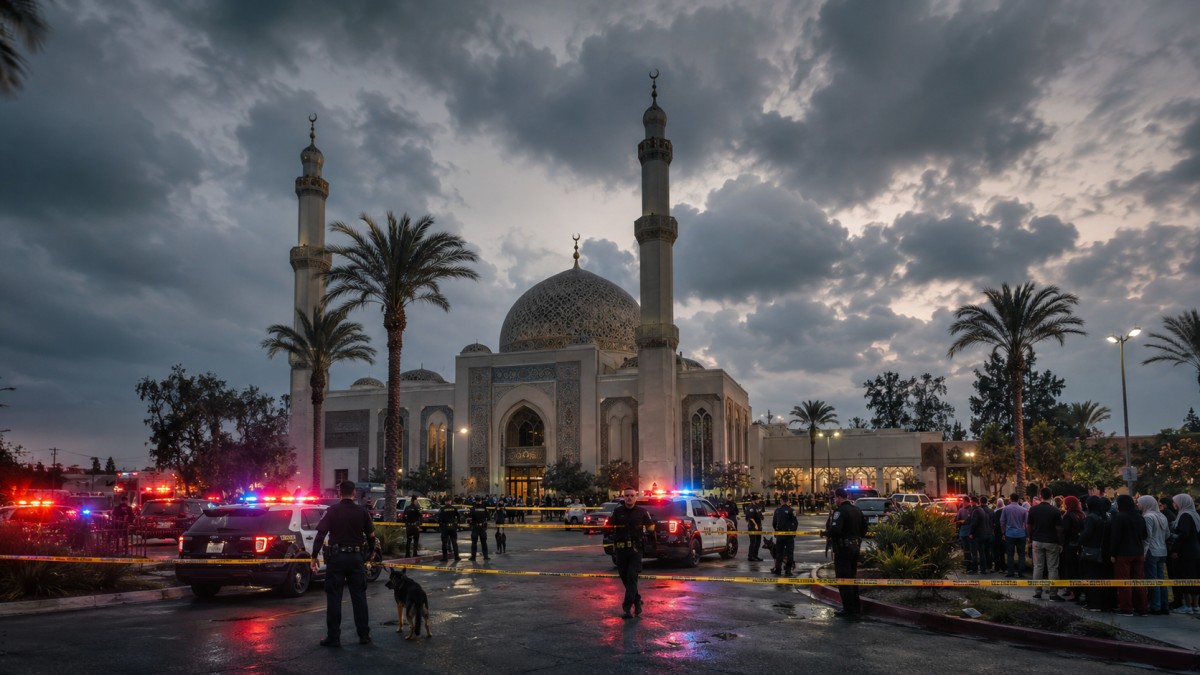
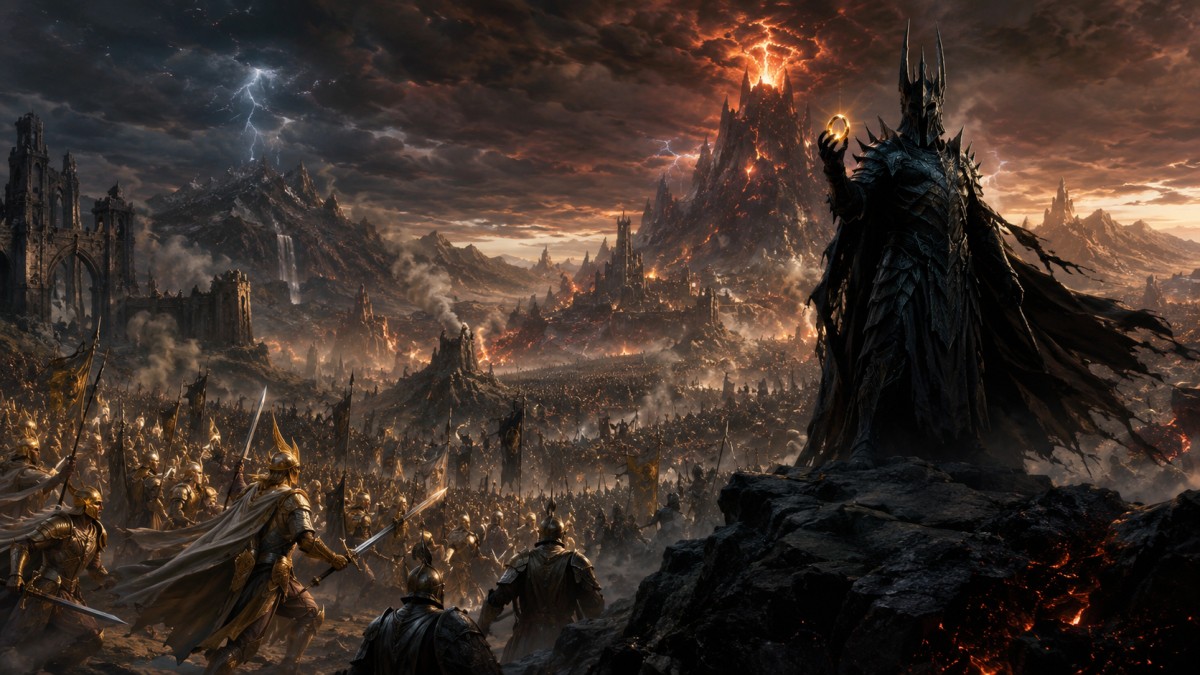
King Charles III Addresses U.S. Congress, Champions Transatlantic Alliance Amid Diplomatic Tensions
Image Credit:AI Tool/ OpenAI / DALL·E
Reading Between the Lines: Trump, NATO, and Military Criticism

President Trump’s recent public statements have not always been flattering toward traditional allies. His criticism of NATO member states for failing to meet defense spending commitments — and pointed remarks about British military capabilities specifically — had set a somewhat prickly diplomatic backdrop for the royal visit.

Charles addressed these tensions not with confrontation, but with the kind of calibrated eloquence that is a hallmark of long-practiced royal diplomacy. His strong endorsement of checks and balances, democratic institutions, and collective security frameworks served as indirect but unmistakable responses to the isolationist and unilateral tendencies that have characterized parts of the Trump administration’s foreign policy posture.

Both leaders, however, made a point of publicly emphasizing shared history and cultural ties when cameras were rolling. At the formal White House banquet held later the same evening, Trump and Charles projected an image of personal warmth and mutual respect — a reminder that even strained alliances have rituals designed to preserve the relationship for better days.

💡 Looking for Budget-Friendly Electric Cars?

If you’re exploring compact electric SUVs but want something more affordable, check out our detailed guide on the most budget-friendly EVs available this year. Discover the cheapest electric vehicles of 2026 that help you save money on fuel without compromising essential features.

👉 Read: Cheapest Electric Vehicles in 2026
The Environment and the Bigger Picture

Beyond geopolitics, Charles used his platform — as he has consistently throughout his public life — to highlight environmental concerns. His remarks wove climate responsibility into his broader vision of global cooperation, suggesting that the challenges of the natural world, like those of international security, cannot be solved by any single nation turning inward.

This has long been a signature theme for the King, and its inclusion in a congressional address carries symbolic significance: a reminder that the most urgent issues of our time respect no borders and demand exactly the kind of multilateral commitment he was championing throughout the visit.

A Moment of Unity in a Season of Tension

The visit arrives at a genuinely difficult moment in US-UK relations. Disagreements over the ongoing Iran conflict have strained diplomatic channels, and Trump’s repeated skepticism toward NATO has rattled European allies who have long relied on American commitment to collective defense.

Against that backdrop, King Charles’s presence in Washington served a function beyond the ceremonial. It was a signal — to allies, to rivals, and to domestic audiences on both sides of the Atlantic — that the special relationship, however tested, has not been abandoned.

Whether the warmth of a royal visit can translate into concrete diplomatic progress remains to be seen. But in a world where symbols carry weight and gestures matter, Charles’s address to Congress was more than a speech. It was a carefully constructed act of statecraft — delivered with humor, dignity, and an unmistakable sense of historical purpose.

DISCLAIMER

This article has been written and compiled for informational and editorial purposes only. The content is based on a summarized news brief provided by the user and does not claim to represent the verbatim statements, official positions, or verified quotes of any individual, government, or institution mentioned herein.

While every effort has been made to present the information accurately and fairly, this article is an independently composed editorial piece and should not be treated as a primary news source or official record of events.

All names, titles, and references to public figures — including King Charles III and President Donald Trump — are used in a strictly journalistic and non-defamatory context. No affiliation with, endorsement by, or association with any individual, organization, government body, or media outlet is implied or intended.

Readers are encouraged to refer to verified and official news sources for complete and confirmed reporting on the events described.

This content is intended solely for publishing, educational, or informational use.

Avengers Doomsday Is Rewriting the MCU — Doctor Doom, the X-Men, and the Return of Steve Rogers

Avengers: Doomsday Is Rewriting the MCU — Doctor Doom, the X-Men, and the Return of Steve Rogers

Marvel Studios has never been shy about going big, but what unfolded at CinemaCon in Las Vegas on April 16, 2026 may have permanently redefined what “big” means for the franchise. In a room full of exhibitors and industry insiders, the Russo Brothers and Kevin Feige delivered what is already being called the most jaw-dropping Marvel presentation since the original Infinity War trailer. Avengers: Doomsday is not just another chapter in the MCU — it appears to be a complete reshaping of it.

Robert Downey Jr. Is Back — But Not the Way Anyone Expected

The moment everyone is still processing: Robert Downey Jr. has returned to the Marvel Cinematic Universe. But Tony Stark is dead, and Marvel has no intention of reversing that. Instead, Downey steps into the iron-clad boots of Victor Von Doom — one of Marvel Comics’ most formidable and psychologically complex villains. It is a casting choice so bold it borders on audacious, and yet it makes a strange kind of sense. Downey already proved he could carry an entire cinematic universe on his shoulders as its hero. Now, Marvel is betting he can do the same as its most dangerous threat.

Doctor Doom, in the footage shown exclusively to CinemaCon attendees, is not a simple conqueror. He is a strategist on a cosmic scale, launching a multiverse-wide assault that pulls characters from across timelines and realities into a single catastrophic collision. The trailer reportedly opens with a calm, almost regal Doom surveying fractured dimensions — before unleashing chaos that spans worlds.

The Russo Brothers Return to the Driver’s Seat

Anthony and Joe Russo, who previously helmed Captain America: The Winter Soldier, Civil War, Infinity War, and Endgame, are back directing Doomsday. Their return alone signals that Marvel is treating this as a true spiritual successor to the Infinity Saga — not a soft reboot or a lateral move, but a direct continuation of the story that began building nearly two decades ago. The Russos are known for their ability to balance sprawling ensemble casts without losing emotional focus, and based on the sheer number of characters confirmed for this film, that skill will be tested more than ever before.

Avengers Meet the X-Men: A Historic MCU First

Perhaps even more significant than Doom himself is what Doomsday represents structurally: the first time the Avengers and the X-Men will share the screen in MCU canon. This is a crossover that Marvel fans have dreamed about since Disney’s acquisition of Fox brought mutants back under the Marvel umbrella. Doomsday is where that long wait finally ends.

The CinemaCon footage teases several crossover matchups that are already fueling obsessive online debate. Gambit faces off against Shang-Chi in what appears to be a kinetically charged confrontation. Mystique, the shape-shifting mutant, goes head-to-head with Yelena Belova — a pairing that practically writes itself given both characters’ backgrounds in deception and close-quarters combat. These are not cameos or background appearances. Marvel is leaning into these matchups as genuine dramatic set pieces.

The X-Men Are in Danger — And That’s the Point

A second trailer, reportedly centered on the X-Men’s role in the film, paints a grim picture for mutantkind. The X-Mansion is destroyed. Sentinels — the mutant-hunting robots that have long represented systemic oppression in the comics — appear in force, suggesting that Doom’s plan involves neutralizing the most powerful beings on Earth before the larger assault begins.

Patrick Stewart returns as Professor Charles Xavier, and Ian McKellen reprises his iconic role as Magneto. James Marsden’s Cyclops is shown unleashing a massive optic blast in what appears to be a moment of desperation, the kind of last-resort action that signals the stakes are existential rather than merely physical. These are not background players — the X-Men appear to be central to the film’s emotional core.

Fan theories are already circulating about which mutants might not survive Doomsday. The destruction of the X-Mansion and the Sentinel assault suggest Marvel may be willing to make permanent, painful decisions about characters fans have loved for over two decades. Some speculate that deaths in this film could serve to reset the X-Men’s place in the MCU, clearing space for younger iterations of beloved characters in future projects.

Unconfirmed but widely rumored appearances include Wolverine, Deadpool, Storm, and Jean Grey. Whether any of them factor into the theatrical cut remains to be seen, but their potential presence — particularly Deadpool’s, given his established relationship with the multiverse — adds another layer of unpredictability to an already overwhelming lineup.

Doctor Doom Stops Mjolnir. Steve Rogers Lifts It Again.

Two specific moments from the CinemaCon footage have dominated conversation since the event ended. In the first, Doctor Doom stops Thor’s hammer, Mjolnir, in mid-air — not catching it, not deflecting it, but simply halting it as though physics itself answers to him. It is a visual statement of power more declarative than any monologue could be. In the MCU, Mjolnir’s worthiness enchantment has served as a moral barometer. Doom doesn’t lift it. He just stops it. The distinction is chilling.

The second moment is the return of Chris Evans as Steve Rogers — and the sight of him lifting Mjolnir once more. First teased in Age of Ultron and confirmed in Endgame, Steve’s worthiness was one of the franchise’s most beloved payoffs. His return, and Marvel’s choice to revisit that imagery, suggests Doomsday is not just about introducing new threats — it is about honoring what the original Avengers meant, perhaps for the final time.

Release Timeline and What Comes Next

Avengers: Doomsday is set for a December 18, 2026 global release, with a London premiere on December 7. A public trailer has not yet been released, though sources suggest one may arrive attached to Avatar: Fire & Ash. Given the secrecy surrounding the CinemaCon footage — no recording was permitted — the eventual public trailer will be the first time most audiences get even a glimpse of what Marvel has been building.

What is already clear is that Doomsday is not a transitional film. It is not clearing the deck or setting up the next phase. It is, by every indication from what was shown in Las Vegas, Marvel’s most ambitious single film since Endgame — and possibly the one that changes everything that comes after it.

DISCLAIMER

This article is written for informational and entertainment purposes only. The CinemaCon footage descriptions referenced herein are based on unofficial attendee accounts and unverified leaks circulating on social media and entertainment news platforms — they have not been officially confirmed by Marvel Studios or Disney. Trailer release dates and film details are based on speculation, insider reports, and publicly available information at the time of writing (April 26, 2026) and are subject to change without notice. All box office figures cited are sourced from publicly reported data. This article is not affiliated with, endorsed by, or representing Marvel Studios, Disney, or any associated production companies. All character names, film titles, and related intellectual property belong to their respective copyright holders. Reader discretion is advised when treating leaked or rumored content as confirmed fact.

Avengers Doomsday — Everything We Know Before the Trailer Drops

Avengers: Doomsday Is Rewriting the MCU — Doctor Doom, the X-Men, and the Return of Steve Rogers

Avengers: Doomsday — Everything We Know Before the Trailer Drops

Marvel Studios has done something almost impossible in the age of social media — it has kept one of the most anticipated films in cinema history shrouded in genuine mystery. As of today, April 26, 2026 — the seventh anniversary of Avengers: Endgame’s release, a date fans had circled on their calendars with obsessive hope — no official public trailer for Avengers: Doomsday exists. And somehow, that silence has made the noise around this film even louder.

Here is a complete breakdown of every confirmed fact, leaked detail, and credible speculation surrounding the Marvel Cinematic Universe’s next seismic event.

The Trailer That the World Hasn’t Seen Yet

There is a trailer. It exists. Industry sources have confirmed it. Marvel screened it — but only for a select audience of cinema exhibitors at CinemaCon in Las Vegas, behind closed doors, with one extraordinary precaution: anti-piracy laser technology deployed throughout the screening room to prevent any recording or leaking of footage. The lengths Marvel went to in order to protect this reveal speak volumes about what they believe they have on their hands.

Insider Daniel Richtman, one of the more reliable voices in the Marvel rumor space, confirmed the trailer is “close” to a public release. Marvel’s own Latin American social media account added fuel to the speculation fire by posting a cryptic message — “Avengers music plays” — the kind of teasing move that sends fan communities into overdrive.

So when does the world finally see it? Three windows are being widely discussed. The first was today, April 26, the Endgame anniversary — a date with obvious emotional weight for Marvel and its audience. The second is a theatrical attachment strategy: the trailer could debut on the big screen alongside The Mandalorian & Grogu, which releases next month, giving audiences a reason to show up in theaters for what would essentially be a premium trailer experience. The third option is CCXPMX 2026 — Comic-Con Experience Mexico — where Marvel has historically made major announcements for Latin American audiences and beyond.

Whatever the release window, the anticipation has been building on a foundation Marvel has already laid carefully. Four teaser clips for Doomsday have been released to date, all of them attached to Avatar: Fire and Ash, and together those four teasers have racked up a combined one billion views. A billion views on material that hasn’t even shown audiences the full film yet. The appetite is extraordinary.

What Was Actually Shown at CinemaCon

Despite Marvel’s best efforts, CinemaCon attendees talked. The broad strokes of what was screened have filtered out through verified industry accounts, and what has been described sounds like a film built to be generational.

Robert Downey Jr. is back — but not as Tony Stark. He is playing Doctor Doom, and those who witnessed the footage report something striking: RDJ has constructed an entirely different voice for this character. Gone is the easy charisma and sardonic wit of Stark. In its place is something heavier, more deliberate, more menacing. One line in particular has circulated widely among those present: “Before this day is done, we shall be faced with an unthinkable decision.” It is the kind of line that functions as a thesis statement — not just for a scene, but for an entire film.

The footage showed Thor in direct conflict with Doctor Doom, a clash of mythological and political power that sets up the central confrontation the film appears to be building toward. But it was another Thor moment that reportedly drew the biggest reaction from the room. Steve Rogers — Captain America — returns, and in what sounds like an emotionally devastating callback to Avengers: Age of Ultron and the culmination of years of storytelling, Mjolnir flies to Rogers’ hand. Thor watches it happen. For audiences who have followed these characters across more than a decade of films, that single image reportedly landed like a thunderclap.

Beyond the headliners, the footage teased the MCU’s expanding roster in genuinely surprising ways. Gambit — the beloved X-Men card-throwing Cajun mutant who fans waited years to see enter the MCU properly — is shown in combat with Shang-Chi. Mystique, the X-Men shapeshifter, is depicted going head-to-head with Yelena Belova in a sequence that reportedly uses her shapeshifting abilities to particularly unsettling effect: Mystique transforms into Yelena mid-fight, creating a disorienting and psychologically charged confrontation.

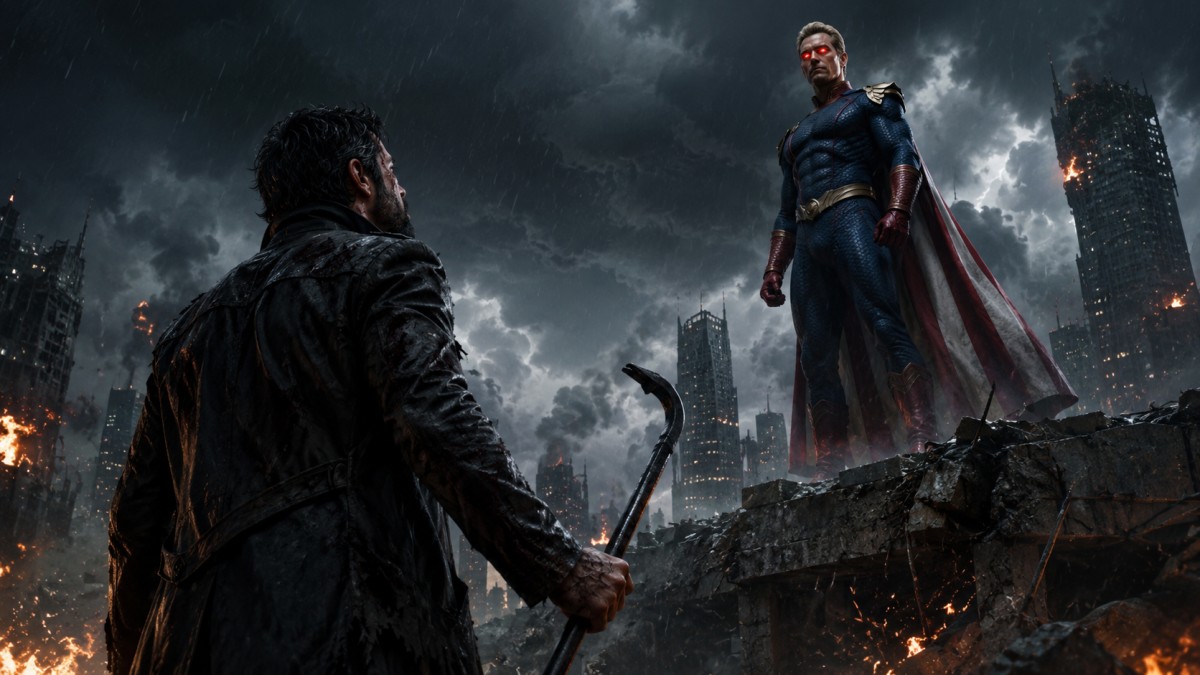
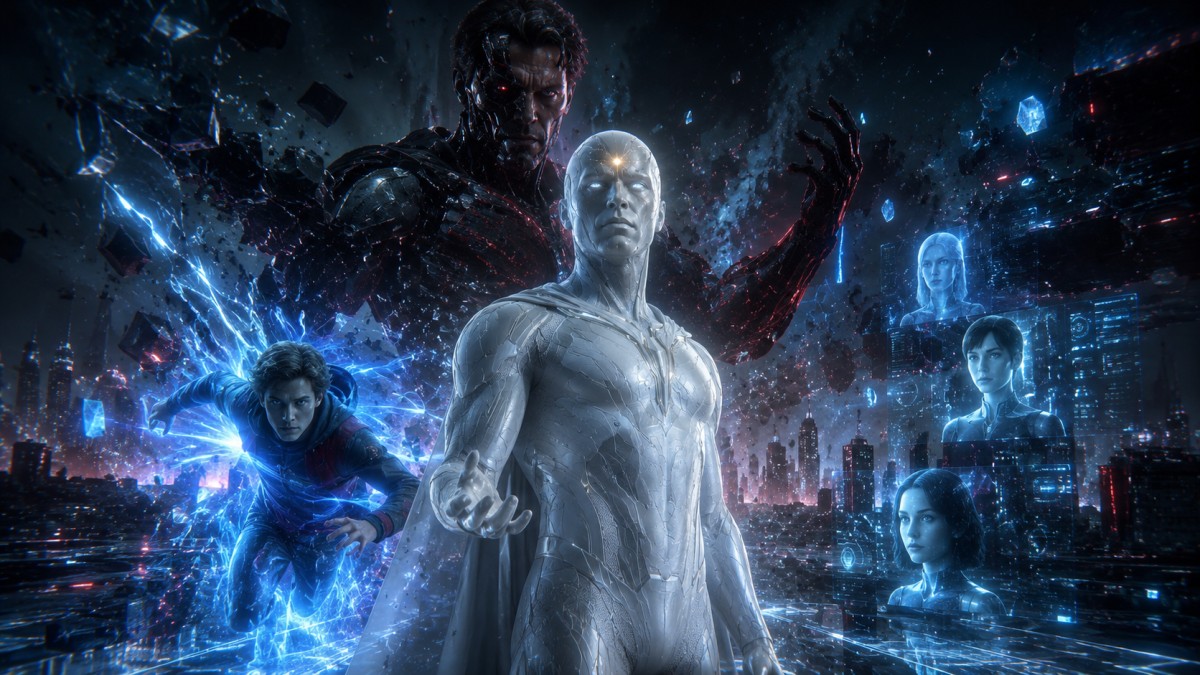
Avengers: Doomsday — Everything We Know Before the Trailer Drops
Image Credit:AI Tool
The Film’s Scope and Team

Avengers: Doomsday is being positioned as a convergence event on a scale the MCU has never attempted before. The confirmed ensemble pulls from corners of Marvel’s universe that have never shared screen space: the X-Men, the Fantastic Four, the Wakandans, and the former Thunderbolts are all reported to feature in the film’s story.

Anthony and Joe Russo — the directors behind Captain America: The Winter SoldierCivil WarInfinity War, and Endgame — are back in the chair. Stephen McFeely, who co-wrote the Infinity Saga’s defining chapters, returns alongside Michael Waldron, whose work on Doctor Strange in the Multiverse of Madness and Loki established him as one of Marvel’s most ambitious narrative architects. The production is a collaboration between Marvel Studios and AGBO, the Russo brothers’ production banner, which gives the project an unusual degree of creative cohesion at the top.

The film is set for release on December 18, 2026 — a date that places it squarely in award season and holiday box office territory, the same battlefield where Marvel has historically dominated.

The Shadow of Endgame

Every conversation about Doomsday eventually circles back to Endgame. It earned $2.799 billion worldwide. It became the fastest film in history to cross the $1 billion mark, doing so in just five days. It was not just a commercial event — it was a cultural one, a moment where cinemas felt like communal spaces for shared feeling rather than just entertainment venues.

Marvel is clearly aware of this inheritance. The choice to bring the Russos back, to reunite McFeely with the franchise, to reintroduce Steve Rogers, to cast RDJ in a role that requires audiences to entirely re-contextualize their relationship with a beloved face — all of it signals a studio that understands what it is reaching for.

Whether Doomsday achieves that is a question only December 2026 can answer. But the evidence available right now — a hidden trailer that has already become legendary before anyone has seen it, one billion views on four teasers, footage descriptions that are sending fans into genuine emotional responses — suggests Marvel may be about to do something rare in franchise filmmaking.

Deliver on the promise.

Release Date: December 18, 2026 | Directors: Anthony & Joe Russo | Writers: Stephen McFeely & Michael Waldron

DISCLAIMER

This article is written for informational and entertainment purposes only. The CinemaCon footage descriptions referenced herein are based on unofficial attendee accounts and unverified leaks circulating on social media and entertainment news platforms — they have not been officially confirmed by Marvel Studios or Disney. Trailer release dates and film details are based on speculation, insider reports, and publicly available information at the time of writing (April 26, 2026) and are subject to change without notice. All box office figures cited are sourced from publicly reported data. This article is not affiliated with, endorsed by, or representing Marvel Studios, Disney, or any associated production companies. All character names, film titles, and related intellectual property belong to their respective copyright holders. Reader discretion is advised when treating leaked or rumored content as confirmed fact.

Cristiano Ronaldo: The Man Who Refused to Be Ordinary

Cristiano Ronaldo: The Man Who Refused to Be Ordinary
The Boy From Madeira

There is a small, volcanic island off the coast of Portugal called Madeira. It is known for its wine, its flowers, and its cliffs that fall sharply into the Atlantic. It is not, historically, a place the football world has paid much attention to. But on the 5th of February, 1985, a boy was born in Funchal — the island’s capital — who would go on to change that forever.

Cristiano Ronaldo dos Santos Aveiro was the youngest of four children born to José Dinis Aveiro and Maria Dolores. His father, a kit man at local club Andorinha, named him partly after his favourite actor — U.S. President Ronald Reagan, who was also an actor before his time in the White House. It is one of the more unusual origin stories in football, but then Ronaldo’s entire life has been one of unusual chapters.

Growing up in a modest household, young Cristiano was obsessed with football from the moment he could walk. He joined Andorinha at the age of seven, moved to Nacional at ten, and by twelve had caught the eye of Sporting CP’s scouts in Lisbon. Leaving his family on the island at that young age was difficult — he wept, homesick and isolated in a new city — but the sacrifice was the first of many he would make in pursuit of greatness.

At Sporting’s academy, he was sometimes teased for his Madeiran accent. Rather than breaking him, it hardened him. He trained longer, ran faster, and worked until nobody could ignore him. At fifteen, he was diagnosed with tachycardia — a heart condition that required laser surgery. Doctors cleared him quickly. He never looked back.

Cristiano Ronaldo: The Man Who Refused to Be Ordinary
A Teenager Who Turned Heads at Old Trafford

In 2002, Ronaldo broke into Sporting CP’s first team. He was seventeen. During a pre-season friendly against Manchester United in August 2003, he put on a performance so electrifying that United’s players reportedly lobbied Sir Alex Ferguson to sign him before the game was even over. Ferguson obliged, paying £12 million — a record fee for a teenager in England at the time.

He arrived at Old Trafford as a boy — impossibly skilful, maddening to defend against, but raw and inconsistent. The step-overs were dazzling, the showboating sometimes excessive. United supporters loved him. Defenders loathed him. Ferguson mentored him with patience and steel in equal measure.

The transformation was gradual, then sudden. By the 2006–07 season, he was scoring 17 Premier League goals. The following season — 2007–08 — he exploded with 31 league goals, winning the Premier League Golden Boot and, alongside Wayne Rooney, driving United to the Champions League title. That night in Moscow, when United beat Chelsea on penalties, Ronaldo had tears in his eyes when he missed his spot-kick. United still won. He was named FIFA World Player of the Year. He was 23 years old.

The Ballon d’Or followed. His first of five.

The Real Madrid Years — History Rewritten

In the summer of 2009, Real Madrid broke the world transfer record, paying Manchester United £80 million for their prized asset. It was a number that made headlines around the world. What followed over the next nine years made those headlines look modest.

At the Bernabéu, Ronaldo did not just excel — he reinvented what a footballer could achieve statistically. In his debut season he scored 33 goals across all competitions. The following year he became the first player in history to score 40 La Liga goals in a single season. By 2011–12, he had set a record that still staggers — 60 goals in all competitions in one calendar year.

Cristiano Ronaldo: The Man Who Refused to Be Ordinary
Image Credit:AI Tool

Season after season, the numbers piled up. In 2013–14, he scored a then-record 17 Champions League goals as Real Madrid won “La Décima” — their tenth European Cup, ending a twelve-year wait. The following season, he scored 61 goals — a personal best. He won the Ballon d’Or again in 2013, 2014, 2016, and 2017.

He scored his 400th Real Madrid goal. Then his 450th. He became the all-time top scorer in Champions League history — a record he holds to this day with 140 goals, a figure that seems almost impossible to contemplate. In nine seasons at the club, he scored 311 goals in La Liga and 450 goals across all competitions, winning four Champions League titles, two La Liga titles, and countless individual honours.

When he left Real Madrid in 2018, it was not with a whimper. It was after completing a Champions League hat-trick against Juventus that had the opposing fans rising to applaud him. He was 33 years old. He still had things to prove.

Italy, Turin, and the Quest for New Mountains

Juventus paid €100 million for him — a world record for a player over thirty. Eyebrows were raised. Some suggested the era was ending. Ronaldo responded by winning two Serie A titles and, in 2020–21, becoming the league’s top scorer — the Capocannoniere — at the age of 36.

He had now scored 100 or more goals in three different leagues. He had won league titles in England, Spain, and Italy. He was not just a generational talent — he was something football had never quite seen before.

The Portugal Legacy — A Nation’s Greatest Son

It is sometimes forgotten, amid all the club glory, that Ronaldo’s international career stands entirely in a category of its own. He made his debut for Portugal on 20 August 2003, the same year he arrived at Manchester United. He scored his first international goal at Euro 2004.

Twenty-two years later, he is the most capped male player in the history of international football with 226 appearances, and the all-time leading scorer in men’s international football with 143 goals — a record that seems almost untouchable. He has captained his country since Euro 2008. He has played in five World Cups and six European Championships. At the 2018 World Cup, he scored a hat-trick against Spain in one of the great individual performances in tournament history.

The trophy he wanted most arrived in 2016, when Portugal defeated France in the final of the European Championship on home soil — in Paris — despite Ronaldo himself going off injured in the first half. He spent the rest of the match on the touchline, his knee heavily strapped, coaching and urging his teammates. When the final whistle blew, he collapsed in tears. It was, perhaps, his most human moment.

Portugal won the UEFA Nations League in 2019 and again in 2025. He has now won every major honour the international game can offer.

Al-Nassr, Saudi Arabia, and the Final Chapter

In January 2023, following a messy departure from Manchester United — where he had scored 27 goals in a difficult second spell — Ronaldo signed for Al-Nassr in Saudi Arabia. The move was met with scepticism in Europe. Many believed it was a retirement move, a final payday, a slow exit from the stage.

What followed was typical Ronaldo. He dominated the Saudi Pro League with a ferocity that silenced critics. In 2023–24, he scored 35 league goals — a record for a single season in the Saudi Pro League. The following season, 2024–25, he won the Golden Boot again. At 40 years old, he remains the league’s most dangerous striker and, by a considerable distance, its biggest star.

His salary at Al-Nassr — €200 million per year including commercial deals — makes him the highest-paid athlete on earth, a title Forbes has given him five times in his career. He was the world’s highest-paid athlete in 2023, 2024, and 2025, three consecutive years. His total career earnings stand at approximately $2.52 billion, making him the first footballer and one of very few athletes to earn $1 billion from the sport.

The Man Behind the Machine

Away from the football, Ronaldo is a complex, deeply driven human being. He speaks openly about his father José, who died in 2005 from liver failure at just 52 — a loss that visibly shaped him. His mother Maria Dolores has been a constant presence throughout his career, surviving breast cancer and remaining the emotional anchor of the family.

He has five children: his son Cristiano Jr., born in 2010, who now plays for Portugal’s Under-15 national team; twins born in 2017; a daughter born later that year; and twins born in 2022, one of whom tragically did not survive. He is engaged to Georgina Rodríguez, an Argentine-Spanish model with whom he has been since 2016, with the engagement confirmed in August 2025.

His hometown of Funchal renamed its airport in his honour in 2016. There is a museum dedicated to him there — Museu CR7 — opened in 2013. A galaxy was named after him in 2015. Sporting CP renamed their academy the Academia Cristiano Ronaldo. In February 2026, he acquired a 25% ownership stake in Spanish club UD Almería. He co-owns a media company in Portugal. He runs a fashion brand. He launched a YouTube channel in August 2024.

He has over one billion combined social media followers — the first human being in history to reach that number across platforms.

What Makes Him Different

The debate about whether Ronaldo or Lionel Messi is the greatest player of all time will likely never have a consensus answer, and that is part of what makes it fascinating. But what is undeniable about Ronaldo — and what makes him a singular figure beyond the debate — is the nature of his greatness.

He was not born with Messi’s otherworldly natural touch. He was not the most gifted youth player at Sporting’s academy. What he had — and what has never diminished with age — is an almost pathological refusal to accept limitation. He reinvented his game multiple times: from electric winger to goalscoring machine to free-roaming centre forward. He changed his physique, his diet, his sleeping patterns. He reportedly sleeps in multiple short cycles rather than one long sleep. He practises free kicks in the dark to sharpen his muscle memory.

His trademark “Siuuu” celebration — the jump, the spin, the pose — was first performed on 7 August 2013. In the years since, it has become one of the most recognisable gestures in world sport.

The Numbers Don’t Lie

At the time of writing, Cristiano Ronaldo has scored over 960 official career goals across clubs and country — the highest total in the history of the sport. He holds the record for most Champions League goals (140), most Champions League assists (42), most goals at European Championships (14), most World Cup qualifying goals for a European nation (41), and most international caps for any male player (226).

He is 41 years old. He is still playing. He is still scoring.

Whatever one thinks about his personality, his theatrics, his social media presence, or the noise that follows him everywhere — the football record is simply unmatched. A boy from a small Atlantic island who refused, at every stage, to be told what was possible.

That, in the end, is the Cristiano Ronaldo story. It is not finished yet.

Disclaimer: This profile is created for informational and editorial purposes only. All statistics, records, and personal details are based on publicly available data and may not reflect the most current figures. This content is not affiliated with, endorsed by, or officially connected to Cristiano Ronaldo, his management, or any associated organizations. All trademarks, names, and images referenced belong to their respective owners.

Question-1: Who is Cristiano Ronaldo Jr?

Cristiano Ronaldo Jr. is the eldest son of Cristiano Ronaldo. He is a young football talent and has trained in youth academies of top clubs like Juventus and Manchester United.

Question-2: How many goals has Cristiano Ronaldo scored in his career?

Cristiano Ronaldo has scored over 850+ official career goals for club and country, making him one of the greatest goal scorers in football history.

Question-3: What is Cristiano Ronaldo’s Instagram account?

Cristiano Ronaldo’s official Instagram handle is @cristiano, where he shares updates about football, fitness, lifestyle, and endorsements.

Question-4: Where can I read about Cristiano Ronaldo on Wikipedia?

You can find complete details about his career, records, awards, and personal life on his official Wikipedia page.

Question-5: How many children does Cristiano Ronaldo have?

Cristiano Ronaldo has five children: Cristiano Ronaldo Jr., twins Eva and Mateo, Alana Martina, and Bella Esmeralda.

Question-6: What is Cristiano Ronaldo’s net worth?

Cristiano Ronaldo’s estimated net worth is over $500 million, earned through football contracts, sponsorships, and business ventures.

Question-7: Who is Cristiano Ronaldo’s wife?

Cristiano Ronaldo is not officially married, but he is in a long-term relationship with Georgina Rodríguez.

Question-8: What is Transfermarkt data for Cristiano Ronaldo?

Transfermarkt provides detailed statistics including market value, transfer history, appearances, and performance data throughout Cristiano Ronaldo’s career.