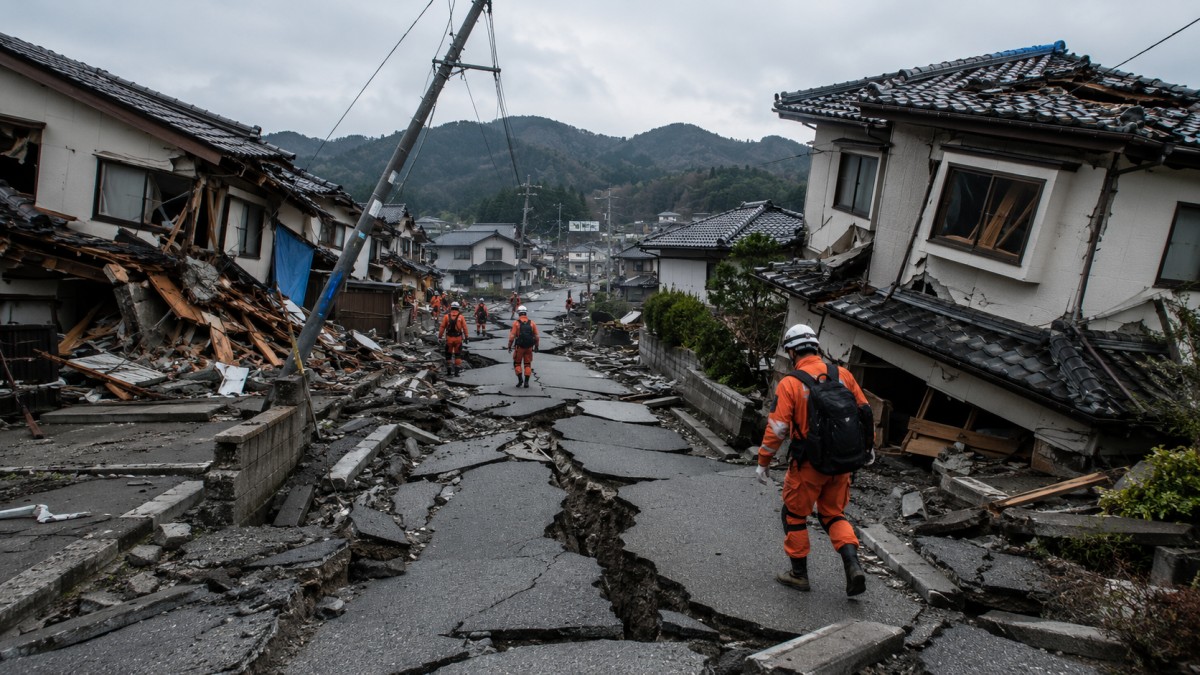
Japan Earthquake Today: Powerful 7.1 Magnitude Quake Strikes Kumamoto, Tsunami Advisory Issued Across Kyushu
A powerful 7.1 magnitude earthquake struck Kumamoto Prefecture on Japan’s southern island of Kyushu on Tuesday, July 28, triggering widespread emergency responses, tsunami advisories, transportation disruptions, and power outages across the region.
The earthquake was among the strongest to hit the area in recent years, reviving memories of the devastating 2016 Kumamoto earthquakes that claimed hundreds of lives. Authorities immediately urged residents to remain alert for aftershocks while emergency services assessed the extent of the damage.
Although no major casualties were immediately confirmed, officials warned that the situation remained fluid as inspections continued throughout the affected prefectures.
Epicenter Located Near Uki City
According to preliminary information released by Japan’s meteorological authorities, the earthquake originated near Uki City, located south of Kumamoto City.
The quake struck at a depth of approximately 10 kilometers (6.2 miles), making it a relatively shallow earthquake capable of producing intense ground shaking.
Japan’s seismic intensity scale recorded the maximum possible intensity of Shindo 7, indicating extremely violent shaking capable of causing severe structural damage.
The strongest shaking was concentrated across central Kumamoto Prefecture, while tremors were felt throughout much of Kyushu.
Areas That Experienced the Strongest Shaking
Authorities reported Shindo 6+ shaking in several municipalities, including:
- Yatsushiro
- Uto
- Mashiki
- Misato
- Kumamoto City’s Minami Ward
Meanwhile, many other communities across Kyushu recorded Shindo 5-lower or stronger, enough to knock over furniture, damage buildings, and interrupt daily life.
Residents described intense shaking lasting several seconds as emergency alerts sounded across mobile phones and public warning systems.
Tsunami Advisory Issued for Coastal Areas
Following the earthquake, the Japan Meteorological Agency (JMA) issued a tsunami advisory covering coastal regions along the:
- Ariake Sea
- Yatsushiro Sea
Officials warned that multiple tsunami waves could affect low-lying coastal communities and urged residents to immediately move away from beaches, ports, and waterfront areas.
Authorities later indicated that the first tsunami wave was believed to have reached parts of the coastline shortly after the earthquake, although officials continued monitoring sea levels for additional waves.
Residents were instructed not to return to coastal areas until authorities officially declared the danger over.
Emergency Warnings Sent Across Seven Prefectures
Japan’s nationwide earthquake early warning system automatically issued emergency alerts shortly after seismic activity was detected.
Warnings were delivered to residents across:
- Kumamoto
- Nagasaki
- Kagoshima
- Fukuoka
- Saga
- Oita
- Miyazaki
The alerts allowed many residents and businesses to take protective action seconds before the strongest shaking arrived.
Japan’s advanced earthquake warning network remains one of the world’s most sophisticated disaster preparedness systems.
Thousands Lose Electricity
The powerful earthquake disrupted essential infrastructure across Kumamoto Prefecture.
Approximately 45,600 households temporarily lost electricity as utility crews worked to inspect damaged power lines and restore service safely.
Authorities advised residents to avoid damaged electrical equipment and report hazards immediately.
Power restoration efforts began soon after the earthquake, though officials warned that repairs could take time in heavily affected neighborhoods.
Rail Services Suspended Across Kyushu
Transportation was also significantly affected.
JR Kyushu suspended train operations across parts of the island, including services on the Kyushu Shinkansen, Japan’s high-speed bullet train network.
Rail operators halted services to inspect tracks, tunnels, bridges, and stations for structural damage before allowing trains to resume operation.
Travelers were advised to monitor official transportation updates before beginning their journeys.
Nuclear Facilities Report No Abnormalities
Despite the strength of the earthquake, Japan’s Nuclear Regulation Authority confirmed that no abnormalities were detected at nearby nuclear power facilities.
Routine inspections were initiated immediately after the earthquake as part of Japan’s strict nuclear safety protocols developed following the 2011 Fukushima disaster.
Officials said all monitored facilities were operating safely at the time of the inspection.
Sony and TSMC Assess Manufacturing Operations
Several major technology manufacturers operate facilities in the affected region.
Sony, which maintains production facilities in Kumamoto, announced it was assessing the impact of the earthquake on its operations.
Meanwhile, TSMC (Taiwan Semiconductor Manufacturing Company), the world’s largest contract chipmaker with manufacturing operations in Kumamoto, had not immediately released a public statement regarding operational conditions.
Industry analysts noted that any prolonged production disruption could have broader implications for global semiconductor supply chains, although no shutdowns had been officially confirmed.
Japan’s Location Makes Earthquakes Common
Japan sits along the Pacific Ring of Fire, one of the world’s most active seismic zones.
The country lies where multiple tectonic plates meet, creating frequent earthquakes and volcanic activity.
Experts estimate that:
- Japan experiences an earthquake roughly every five minutes.
- Around 20% of the world’s magnitude 6.0 or greater earthquakes occur in or near Japan.
Because of this constant seismic activity, Japan has invested heavily in earthquake-resistant infrastructure, early warning systems, strict building regulations, and disaster preparedness education.
These measures have significantly reduced casualties from many recent earthquakes despite their frequency.
Memories of the 2016 Kumamoto Earthquakes
Tuesday’s earthquake comes just over 10 years after the catastrophic 2016 Kumamoto earthquake sequence, one of Japan’s deadliest natural disasters in recent history.
The 2016 disaster resulted in:
- 278 deaths
- Approximately 2,800 injuries
- Thousands of damaged or destroyed homes
- Severe destruction at the historic Kumamoto Castle
The castle, one of Japan’s most iconic historical landmarks, suffered extensive structural damage.
Large-scale restoration work has continued for years and is currently expected to continue until 2052, reflecting the complexity of preserving the centuries-old structure.
For many residents, Tuesday’s earthquake revived painful memories of that disaster, prompting swift evacuations and emergency preparations.
Authorities Warn of Aftershocks
Emergency management officials cautioned residents that strong aftershocks remain possible in the coming hours and days.
People living in damaged buildings were advised to relocate if structures appeared unsafe and to avoid areas where landslides or falling debris could occur.
Authorities also encouraged residents to:
- Keep emergency supplies nearby.
- Monitor official government announcements.
- Avoid unnecessary travel.
- Stay away from damaged buildings.
- Remain prepared for additional seismic activity.
Japan’s disaster management agencies continue monitoring the situation around the clock.
Emergency Response Underway
Local governments, emergency responders, utility companies, and transportation agencies immediately launched coordinated response efforts following the earthquake.
Damage assessments are continuing throughout Kumamoto and neighboring prefectures, while engineers inspect roads, bridges, rail infrastructure, and public facilities.
Officials emphasized that the full extent of the damage may not become clear until inspections are completed.
Residents have been encouraged to remain calm while following instructions from local authorities.
What Happens Next?
As recovery efforts continue, authorities will focus on:
- Restoring electricity to affected communities.
- Completing infrastructure inspections.
- Monitoring tsunami activity.
- Assessing building safety.
- Tracking aftershocks.
- Supporting residents displaced by damage.
Officials stressed that public safety remains the highest priority and urged everyone in affected areas to rely only on official updates for emergency information.
With Japan’s extensive disaster preparedness systems activated, emergency teams continue working to minimize the impact of one of the country’s strongest earthquakes in recent years.
The 7.1 magnitude earthquake in Kumamoto serves as another reminder of Japan’s ongoing vulnerability to powerful seismic events. While early reports indicate widespread disruptions rather than catastrophic destruction, authorities remain on high alert due to the continued risk of aftershocks and coastal hazards.
Emergency services continue assessing the situation, restoring essential services, and ensuring public safety across Kyushu. Residents are urged to remain cautious, avoid unnecessary travel in affected areas, and closely follow official guidance until all warnings have been lifted.
Disclaimer: This article is based on officially available information at the time of publication. Details may change as Japanese authorities continue inspections and release updated reports.