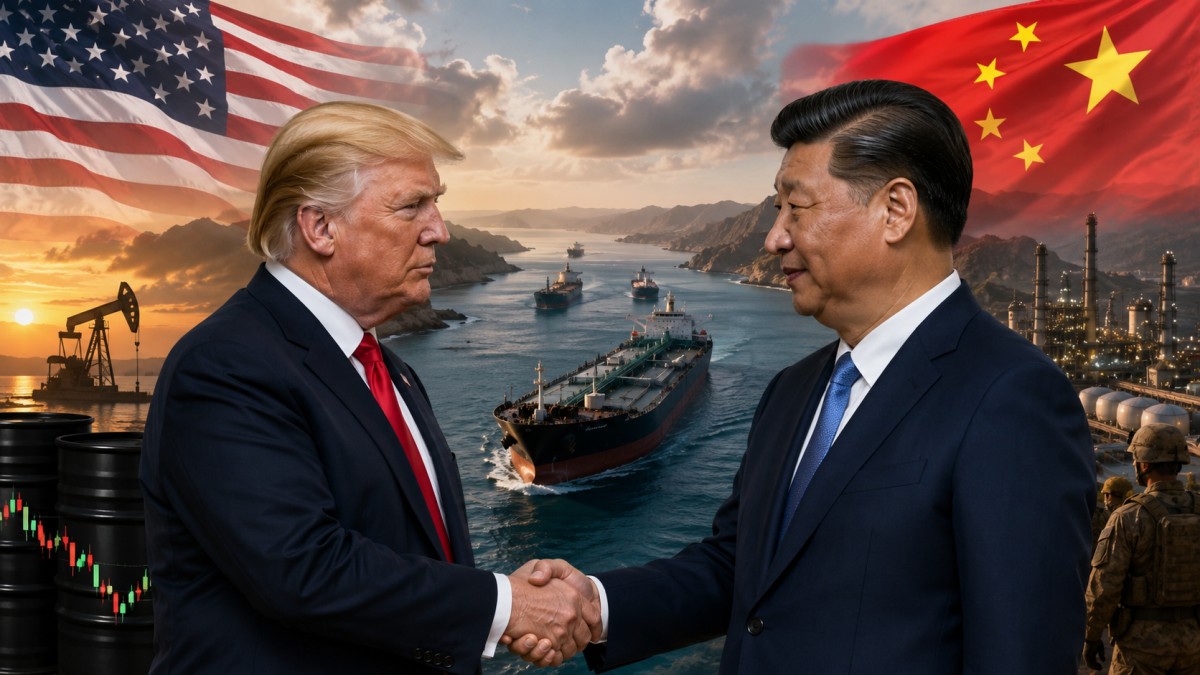
China and the United States Unite Over Strait of Hormuz Concerns
In a rare moment of agreement between two global superpowers, Chinese President Xi Jinping and U.S. President Donald Trump reportedly reached a shared position on one of the world’s most strategically important waterways — the Strait of Hormuz. According to statements released by the White House, both leaders agreed that the Strait must remain open to ensure the uninterrupted flow of global energy supplies.
The development came during Trump’s high-profile visit to China amid escalating geopolitical tensions involving Iran, Israel, and the United States. The Strait of Hormuz, which serves as a critical shipping route for oil and natural gas exports from the Middle East, has once again become the center of global economic and political anxiety.
The White House stated that both countries supported the “free flow of energy” through the region and opposed any actions that could disrupt international trade or destabilize energy markets. The agreement is particularly significant because the United States and China often clash on issues related to trade, military influence, and global strategy. However, the growing risks to the global economy appear to have pushed both sides toward a common objective.
Why the Strait of Hormuz Matters
The Strait of Hormuz is one of the most important maritime chokepoints in the world. A massive percentage of global oil and liquefied natural gas shipments pass through the narrow waterway every day. Any disruption in the region immediately impacts international energy prices, shipping routes, and investor confidence.
Recent tensions linked to the U.S.-Israel conflict involving Iran reportedly created fears that shipping through the Strait could be interrupted. Markets reacted quickly. Oil prices surged, energy traders grew nervous, and economists warned that prolonged instability could slow global economic growth.
China has a major interest in keeping the Strait open because it remains one of the world’s largest importers of oil. Much of China’s energy supply depends on stable maritime trade routes through the Persian Gulf region. At the same time, Western economies are also heavily affected by fluctuations in oil and gas prices, making the crisis a worldwide concern rather than a regional dispute.
China Rejects Militarization of the Strait
One of the key details emerging from the discussions was China’s opposition to the militarization of the Strait of Hormuz. Reports indicated that Beijing rejected any attempt to impose tolls or restrictions on ships passing through the route.
This position reflects China’s broader economic strategy, which depends heavily on uninterrupted international trade. Beijing has traditionally preferred diplomatic stability over military escalation in critical trade regions. By opposing militarization, China signaled that it wants commercial shipping lanes to remain neutral and protected from geopolitical conflicts.
The stance also highlights China’s balancing act in the Middle East. While Beijing maintains important economic and diplomatic ties with Iran, it also wants stable relationships with Gulf nations and Western economies. Supporting open trade routes allows China to present itself as a defender of global economic stability while avoiding direct military involvement.
Xi Jinping’s Interest in American Oil
Another surprising aspect of the discussions involved energy diversification. Reports suggested that Xi Jinping expressed interest in increasing purchases of American oil in the future. Analysts believe this move could help China reduce its dependence on shipping routes through the Strait of Hormuz.
Such a strategy would carry both economic and geopolitical benefits for Beijing. By importing more energy from the United States or alternative suppliers, China could lower the risks associated with instability in the Middle East. It would also provide China with greater flexibility in future energy negotiations.
For the United States, increased Chinese purchases of American oil could offer economic advantages by strengthening energy exports and supporting domestic producers. It may also improve trade relations at a time when tensions between Washington and Beijing have remained high over tariffs, technology restrictions, and security issues.
Iran and the Nuclear Question
The White House also claimed that China agreed Iran should never obtain nuclear weapons. This statement drew attention because Beijing has historically maintained relatively cautious and balanced language regarding Iran’s nuclear ambitions.
Iran’s nuclear program has remained a major source of international concern for years. Western nations, particularly the United States and Israel, argue that Tehran must be prevented from developing nuclear weapons capabilities. Iran, meanwhile, insists its nuclear activities are intended for peaceful purposes.
The timing of the discussions was particularly notable because Iranian Foreign Minister Abbas Araghchi had reportedly visited Beijing shortly before Trump’s arrival. Observers believe China may now face increasing pressure from Washington to use its diplomatic influence over Tehran in order to reduce tensions in the region.
Rising Energy Prices Shake Global Markets
The conflict and uncertainty surrounding the Strait of Hormuz triggered immediate consequences in global financial markets. Energy prices climbed sharply as traders worried about possible supply disruptions.
Higher oil and gas prices have serious ripple effects across the global economy. Transportation becomes more expensive, manufacturing costs rise, and consumer goods prices increase. Countries already struggling with inflation face even greater pressure.
In the United States, inflation reportedly rose significantly, with consumer prices increasing by 3.8 percent year-over-year in April 2025. Gasoline prices climbed by 5.4 percent, adding to public frustration over rising living costs.
Economic experts warned that if tensions continue, energy-driven inflation could slow economic growth in both developed and emerging economies. The crisis has therefore become not only a geopolitical issue but also a major economic challenge.
Marco Rubio Warns of Global Economic Damage
U.S. Secretary of State Marco Rubio emphasized the worldwide economic risks linked to the crisis. Rubio reportedly stated that global economies were already being negatively affected by instability in the Persian Gulf region.
According to Rubio, weaker consumer spending caused by rising fuel prices could eventually hurt Chinese exports as well. Since China depends heavily on international demand for its manufactured goods, a slowdown in global consumption would directly impact the Chinese economy.
Rubio also suggested that China has a strong incentive to pressure Iran into reducing tensions in the Gulf. Washington hopes Beijing can use its diplomatic and economic relationships with Tehran to encourage restraint and prevent further escalation.
The comments reflect a broader U.S. strategy of encouraging China to play a more active role in maintaining international stability, especially in regions where Beijing has significant economic influence.
Trump Claims the U.S. Already Has Iran “Under Control”
During the discussions, Donald Trump reportedly stated that the United States already had Iran “under control” and suggested China did not need to intervene directly in resolving the conflict.
The statement appeared aimed at projecting confidence regarding America’s position in the region. However, analysts noted that Washington still wants support from major powers like China in reducing risks to global energy markets.
Trump’s remarks also came amid intense media attention surrounding his China visit. The article referenced additional unrelated reports involving Melania Trump and broader media coverage connected to the diplomatic trip, showing how political narratives often become intertwined with international crises.
A Rare Moment of Cooperation
Despite ongoing rivalry between Washington and Beijing, the Strait of Hormuz crisis demonstrated that major powers can still find common ground when global economic stability is threatened.
Both China and the United States understand that prolonged instability in the Persian Gulf could damage worldwide growth, increase inflation, and create uncertainty in energy markets. While disagreements remain over trade, security, and geopolitical influence, maintaining open energy routes appears to be a shared priority.
The situation also highlights how interconnected the global economy has become. A conflict in the Middle East can quickly impact fuel prices in America, manufacturing in China, and financial markets across Europe and Asia.
As tensions continue, the world will closely watch whether diplomatic efforts from Washington, Beijing, and regional powers can prevent further escalation and protect one of the world’s most vital energy corridors.
Disclaimer
This article is based on publicly available reports, political statements, and media coverage at the time of writing. Some claims, including diplomatic discussions and unofficial remarks, may not have been independently verified. Geopolitical situations can evolve rapidly, and readers should follow official government statements and trusted international news sources for the latest updates.
Source
- White House statements regarding Donald Trump and Xi Jinping discussions
- International media reports on the Strait of Hormuz crisis
- Public comments from U.S. Secretary of State Marco Rubio
- Reports covering Iran-China diplomatic meetings and global energy market reactions


2 thoughts on “China, Iran, and the Strait of Hormuz Crisis: How Xi Jinping and Donald Trump Found Common Ground Over Global Energy Security”