Pfizer Delivers Strong Q1 Performance
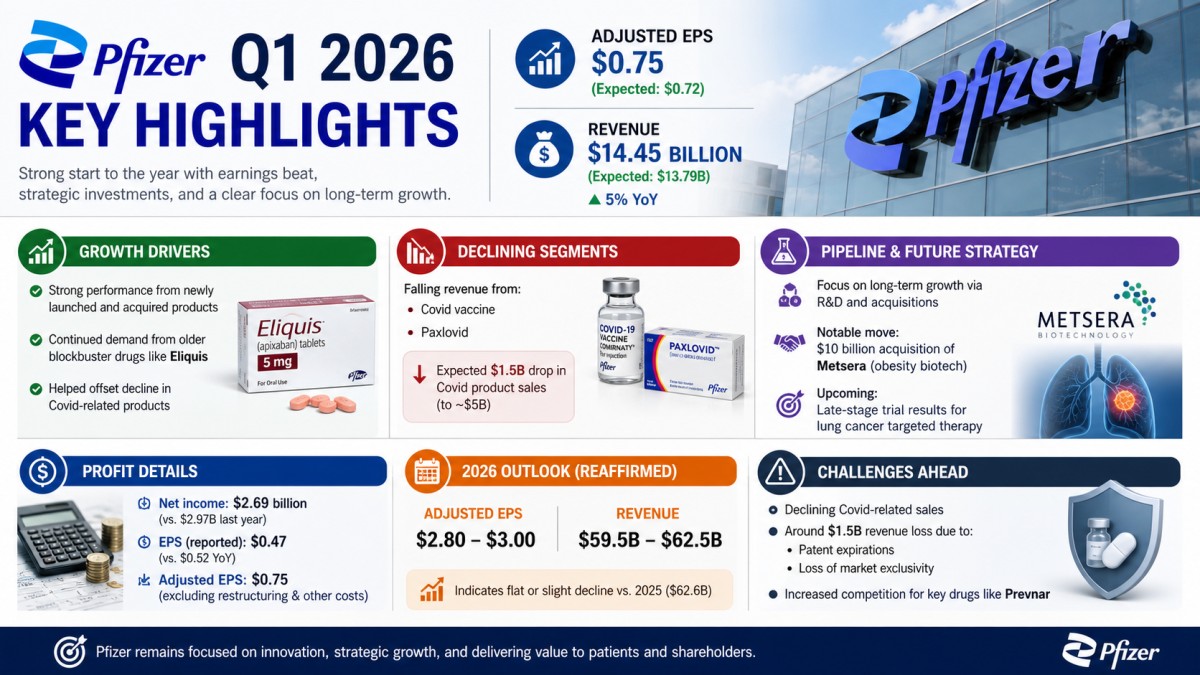
Pfizer kicked off 2026 with a better-than-expected first quarter, surpassing Wall Street forecasts on both earnings and revenue. The pharmaceutical giant reported adjusted earnings per share (EPS) of $0.75, beating expectations of $0.72. Revenue came in at $14.45 billion, also ahead of estimates of $13.79 billion.
This marks a 5% year-over-year increase in revenue, signaling resilience in Pfizer’s core business despite mounting headwinds. While the company’s pandemic-driven revenues continue to fade, its diversified portfolio and strategic investments are helping maintain stability.
However, beneath the surface, Pfizer’s financials reveal a more complex picture—one that combines short-term strength with long-term uncertainty.
Key Growth Drivers: New and Legacy Drugs
A major factor behind Pfizer’s strong quarterly performance was the continued success of its newly launched and acquired products, which are gradually replacing declining pandemic-related revenue streams.
At the same time, established blockbuster drugs continue to play a critical role. One standout performer is Eliquis, a widely used blood thinner that remains a key revenue contributor. Its sustained demand highlights the importance of Pfizer’s legacy portfolio in maintaining cash flow.
These older, high-performing drugs are effectively acting as a financial cushion, allowing Pfizer to navigate a transitional phase as it pivots toward newer therapies and treatments.
Declining Covid Portfolio Weighs on Growth
While Pfizer’s core business shows strength, the company is still grappling with a sharp decline in Covid-related product sales. Revenue from its Covid vaccine and antiviral treatment Paxlovid has dropped significantly.
The company expects approximately a $1.5 billion reduction in Covid-related revenue, bringing total sales from these products down to around $5 billion in 2026. This decline reflects reduced global demand, lower vaccination rates, and the transition of Covid from a pandemic to an endemic phase.
This shift is not unique to Pfizer but represents a broader trend across the pharmaceutical industry. Companies that experienced a pandemic-driven revenue surge are now adjusting to a more normalized demand environment.
Profitability Under Pressure
Despite beating expectations on adjusted earnings, Pfizer’s profitability showed signs of strain. The company reported:
- Net income: $2.69 billion (down from $2.97 billion last year)
- Reported EPS: $0.47 (vs. $0.52 year-over-year)
The decline reflects higher operating costs, restructuring expenses, and the impact of lower-margin product sales.
However, when excluding one-time costs, Pfizer’s adjusted EPS of $0.75 presents a more favorable picture, suggesting that core operations remain relatively strong.
Still, investors are likely to keep a close eye on margins in upcoming quarters, especially as revenue mix shifts away from high-margin Covid products.
Strategic Shift: Betting on Future Growth
To offset declining pandemic revenue and sustain long-term growth, Pfizer is aggressively investing in research, development, and acquisitions.
One of the most notable moves is its $10 billion acquisition of Metsera, a biotech firm specializing in obesity treatments. This acquisition signals Pfizer’s intent to compete in the rapidly growing weight-loss drug market, currently dominated by other major pharmaceutical players.
In addition, Pfizer is advancing its pipeline with a focus on high-value therapeutic areas. Investors are particularly watching for late-stage clinical trial results of a targeted lung cancer therapy, which could become a major revenue driver if successful.
These strategic initiatives reflect a broader effort to reposition Pfizer as a leader in next-generation treatments rather than relying on pandemic-era products.
2026 Outlook: Stability with Limited Growth
Pfizer has reaffirmed its full-year 2026 guidance, projecting:
- Adjusted EPS: $2.80 – $3.00
- Revenue: $59.5 billion – $62.5 billion
Notably, this guidance suggests flat or slightly declining revenue compared to 2025, when the company reported approximately $62.6 billion in total revenue.
This outlook underscores the transitional nature of Pfizer’s current phase. While new products and acquisitions are expected to contribute to growth, they may not fully offset declining Covid revenues and patent-related losses in the near term.
Challenges Ahead: Patent Expirations and Competition
One of the biggest risks facing Pfizer is the looming impact of patent expirations and loss of market exclusivity, which are expected to reduce revenue by around $1.5 billion.
Additionally, increased competition is putting pressure on some of Pfizer’s key products, including Prevnar, a widely used vaccine for preventing pneumococcal infections. As competitors introduce alternative treatments, pricing pressure and market share erosion become real concerns.
These challenges highlight a fundamental issue in the pharmaceutical industry: the constant need to innovate and replace aging revenue streams with new, patent-protected products.
Industry Context: A Post-Pandemic Reset
Pfizer’s current situation reflects a broader reset across the pharmaceutical sector. During the pandemic, companies experienced unprecedented demand and revenue growth. Now, the industry is adjusting to more normalized conditions.
Key trends shaping the sector include:
- Declining Covid-related revenues
- Increased focus on chronic and lifestyle diseases (e.g., obesity)
- Rising R&D costs
- Greater competition from generics and biosimilars
In this environment, companies that successfully innovate and diversify their portfolios are likely to outperform.
Investor Perspective: Cautious Optimism
From an investor standpoint, Pfizer’s Q1 2026 results offer a mixed but generally positive outlook.
Positives include:
- Strong earnings and revenue beat
- Stable performance from core drugs
- Strategic acquisitions and pipeline development
Concerns include:
- Declining Covid product revenue
- Pressure on profit margins
- Patent expirations and competition
The company’s reaffirmed guidance suggests confidence in its strategy, but the lack of significant growth may temper investor enthusiasm in the short term.
A Company in Transition
Pfizer’s Q1 2026 performance highlights a company navigating a critical transition period. While it continues to deliver solid financial results, the decline in Covid-related revenue and emerging competitive pressures present significant challenges.
At the same time, its investments in innovation, acquisitions like Metsera, and a strong pipeline offer a pathway to future growth.
The coming quarters will be crucial in determining whether Pfizer can successfully execute this transformation and reestablish itself as a growth leader in the pharmaceutical industry.
Disclaimer
This article is for informational purposes only and does not constitute financial or investment advice. Investors should conduct their own research or consult a financial advisor before making investment decisions.



One thought on “Pfizer Q1 2026 Earnings Beat, But Growth Faces Pressure”