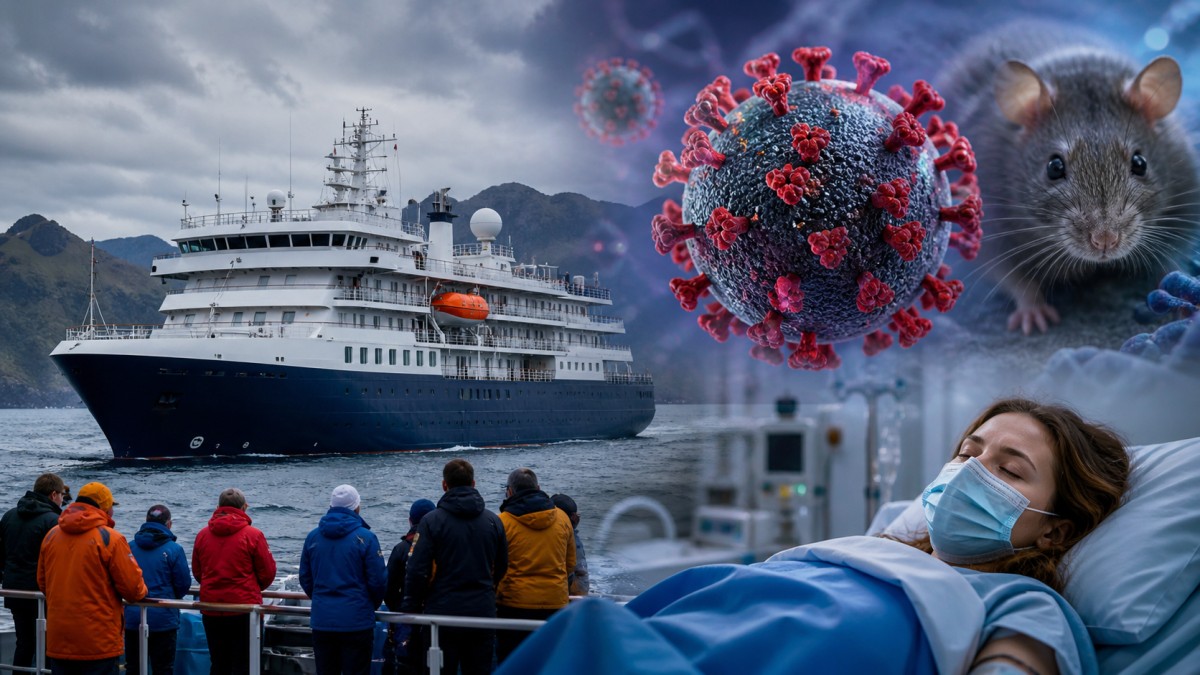
Hantavirus Outbreak on Cruise Ship Raises Global Alarm
A rare and potentially deadly viral outbreak aboard a cruise ship sailing through the Atlantic Ocean has triggered international concern, after multiple passengers fell severely ill and several fatalities were reported. The incident, linked to hantavirus infections, has drawn the attention of global health authorities, with the World Health Organization actively coordinating response efforts.
The outbreak occurred aboard the expedition cruise vessel MV Hondius, operated by Oceanwide Expeditions. The ship, carrying approximately 150 international passengers, had embarked on a multi-week journey across some of the most remote regions of the Southern Hemisphere when the situation began to unfold.
A Deadly and Mysterious Illness at Sea
According to official reports, a total of six individuals on board were identified as infected or suspected to be infected with hantavirus. Of these, one case has been confirmed through laboratory testing, while five others remain under investigation.
Tragically, three of the affected passengers have died, underscoring the severity of the outbreak. Another patient is currently in critical condition and receiving intensive care treatment in South Africa. Additionally, two more individuals on the ship require urgent medical evacuation, though logistical and regulatory hurdles have delayed immediate action.
The emergence of such a serious illness in the confined environment of a cruise ship has raised immediate concerns about containment, transmission, and the adequacy of onboard medical facilities.
Voyage Through Remote Waters
The MV Hondius had set sail from Ushuaia, widely regarded as the southernmost city in the world, with the Canary Islands as its final destination. The journey included stops at several remote and ecologically sensitive regions, including Antarctica, the Falkland Islands, and South Georgia.
Additional stops were planned at isolated islands such as Nightingale Island and Tristan da Cunha, followed by Saint Helena and Ascension Island before reaching Cape Verde.
This extensive itinerary, while appealing to adventure travelers, also presents unique challenges in terms of medical access and emergency response capabilities, particularly when unexpected health crises arise.
Current Situation Near Cape Verde
As of the latest updates, the ship remains near the port of Praia, the capital of Cape Verde. However, authorities have not yet permitted passengers to disembark, citing concerns over potential public health risks.
Local health officials have boarded the vessel to assess the situation firsthand, conducting evaluations and determining the next steps. Despite the urgent need for medical intervention in some cases, evacuation efforts have been delayed pending government approval.
This cautious approach reflects the delicate balance between providing immediate care to affected individuals and preventing the possible spread of infection to the broader population.
Global Health Response Intensifies
The WHO has stepped in to coordinate a multinational response, working closely with the ship’s operator and relevant governments. The organization has also notified international health authorities under established global health regulations.
Ongoing efforts include laboratory testing to confirm additional cases, epidemiological investigations to trace the source and spread of the infection, and advanced sequencing of the virus to better understand its characteristics.
Medical teams are providing continuous care and monitoring to both passengers and crew members, aiming to stabilize those affected while preventing further transmission onboard.
Understanding Hantavirus
Hantavirus is a rare but serious group of viruses primarily transmitted to humans through contact with infected rodents, particularly via their urine, feces, or saliva. In some cases, the virus can become airborne when contaminated materials are disturbed, increasing the risk of inhalation.
The illness can lead to severe respiratory complications, including Hantavirus Pulmonary Syndrome (HPS), which is known for its rapid progression and high fatality rate. In other instances, it may cause kidney-related conditions, depending on the strain involved.
Although human-to-human transmission is considered rare, it is not entirely impossible, especially in close-contact environments. This makes containment efforts on a cruise ship particularly challenging.
Currently, there is no specific antiviral cure for hantavirus infections. Treatment primarily focuses on supportive care, including oxygen therapy and intensive monitoring. Early detection and intervention are critical in improving survival outcomes.
Challenges of Managing an Outbreak at Sea
Managing a viral outbreak on a cruise ship presents unique logistical and medical challenges. Unlike land-based settings, ships operate in isolated environments with limited medical infrastructure, making it difficult to respond quickly to rapidly evolving health emergencies.
In this case, the ship’s remote itinerary has further complicated response efforts. Many of the locations visited are far from advanced medical facilities, and transferring critically ill patients requires coordination between multiple countries and regulatory bodies.
Additionally, the close quarters of a cruise ship can facilitate the spread of infectious diseases, necessitating strict isolation and monitoring protocols to protect other passengers and crew members.
International Coordination and Repatriation Efforts
Authorities in the Netherlands are working alongside other governments to arrange the repatriation of affected individuals. However, these efforts depend heavily on approvals from local authorities in Cape Verde and other involved jurisdictions.
The situation highlights the importance of international cooperation in managing public health emergencies, particularly those that occur in international waters or involve multiple countries.
Governments, health organizations, and private operators must work together to ensure timely medical care, accurate information sharing, and effective containment strategies.
Public Health Implications
While hantavirus outbreaks are relatively rare, this incident serves as a stark reminder of the unpredictable nature of infectious diseases. It also underscores the need for robust health screening protocols and preparedness measures in the travel and tourism industry.
Cruise operators, in particular, may face increased scrutiny regarding their health and safety practices, including sanitation, pest control, and onboard medical capabilities.
For passengers, the outbreak highlights the importance of awareness and caution when traveling to remote regions, where access to healthcare may be limited.
Looking Ahead
As investigations continue, health authorities are working to establish the full scope and source of the outbreak. Determining how the virus was introduced onto the ship will be critical in preventing similar incidents in the future.
In the meantime, efforts remain focused on providing care to those affected and ensuring the safety of all individuals onboard.
The MV Hondius incident is a sobering example of how quickly a localized health issue can escalate into an international concern, particularly in today’s interconnected world.
With coordinated action and continued vigilance, authorities hope to contain the outbreak and minimize its impact, while gaining valuable insights that could strengthen global health preparedness for years to come.
Market Rally Faces Reality as Fed Signals Caution Ahead
Explore how the Federal Reserve’s cautious stance, rising inflation concerns, and earnings season are shaping the future of the stock market rally in 2026.
Disclaimer
The information provided in this article is based on publicly available reports and statements from health authorities, including the World Health Organization. While efforts have been made to ensure accuracy, details may evolve as investigations continue. This content is intended for informational purposes only and should not be considered medical or professional advice. Readers are advised to consult official sources and healthcare professionals for the latest updates and guidance.