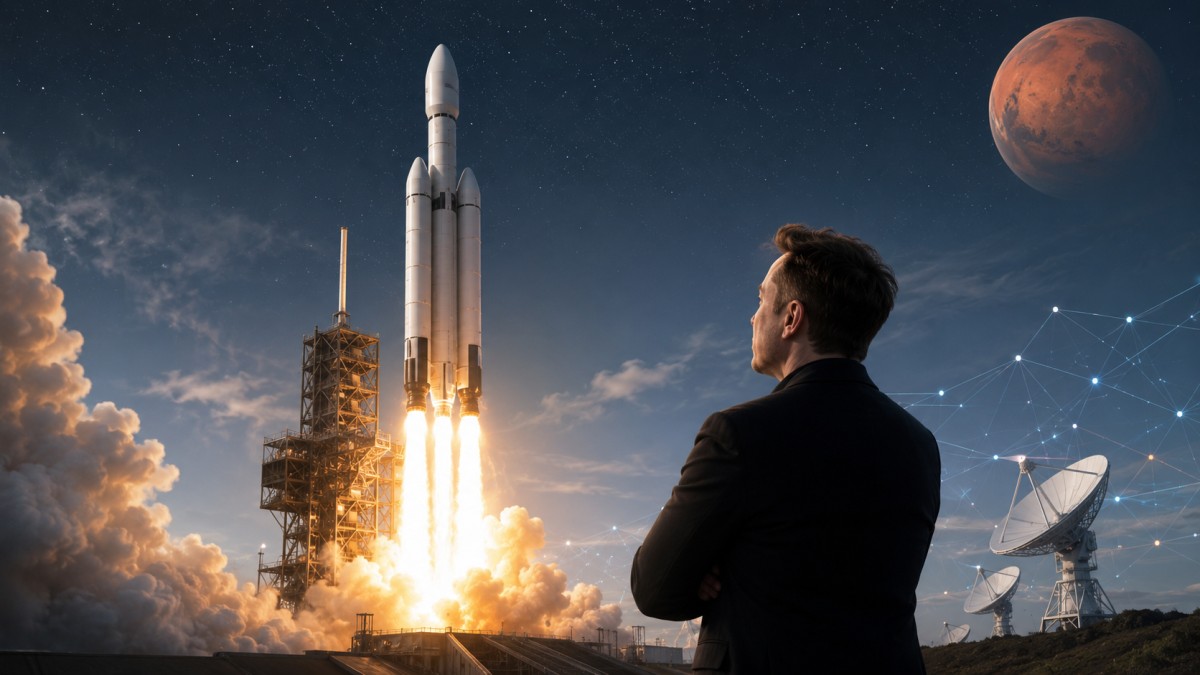
SpaceX IPO Set to Make History With Record-Breaking $75 Billion Public Offering
The world of finance and technology is preparing for what could become the largest public offering in history as SpaceX plans to launch its highly anticipated Initial Public Offering (IPO) on June 12. The move will allow investors around the world to buy shares in Elon Musk’s private aerospace and technology company for the very first time.
The IPO is expected to raise at least $75 billion and value SpaceX at approximately $1.75 trillion, instantly making it one of the ten largest publicly traded companies in the United States. The public listing represents a major milestone not only for SpaceX but also for the broader technology and artificial intelligence sectors, which continue to attract enormous investor interest.
SpaceX Opens Its Doors to Public Investors
Since its founding, SpaceX has remained privately owned by Elon Musk and a group of institutional and private investors. The upcoming IPO will change that, giving retail and institutional investors an opportunity to participate directly in the company’s future growth.
According to details released ahead of the offering, more than 550 million shares are expected to be sold at a price of $135 per share. Once listed, the stock will trade on the Nasdaq exchange, providing broad access to investors through brokerage accounts, investment platforms, retirement funds, and mutual funds.
The listing is being closely watched by financial markets because of both its unprecedented size and the influence of Elon Musk, one of the most recognizable and controversial business leaders in the world.
What Makes SpaceX Different?
SpaceX has evolved far beyond its original identity as a rocket-launch company. Today, the company operates across multiple high-growth industries that many analysts believe will define the future global economy.
Its primary business activities include:
- Space exploration and rocket launches
- Satellite communications networks
- Artificial intelligence development
- Digital technology platforms
- Advanced infrastructure projects
The company’s long-term vision extends even further. SpaceX plans to invest heavily in projects designed to transform humanity’s future, including establishing a permanent human presence on Mars, developing asteroid mining operations, and building AI-powered data centers in space.
Supporters view these initiatives as revolutionary opportunities that could create entirely new industries. Critics, however, argue that many of these projects remain highly speculative and may take decades to become commercially viable.
Elon Musk’s Ambitious Vision
A major reason behind the extraordinary investor interest is Elon Musk’s reputation for pursuing goals that many initially considered impossible.
Throughout his career, Musk has repeatedly pushed technological boundaries, helping transform industries ranging from electric vehicles and renewable energy to space exploration and artificial intelligence.
His vision for SpaceX centers on one core idea: making humanity a multi-planetary species. Musk has frequently argued that expanding human civilization beyond Earth is essential for ensuring long-term survival and reducing existential risks.
Funds raised through the IPO are expected to support this broader mission while also helping the company expand existing operations and accelerate research into next-generation technologies.
For many investors, buying SpaceX shares is not simply an investment in a company—it is a bet on Musk’s long-term vision of the future.
Why Investors Are Excited
Several factors are driving extraordinary demand for the SpaceX IPO.
First, the company holds a leading position in the rapidly growing space industry. Commercial space launches, satellite communications, and space infrastructure are expected to become multi-trillion-dollar markets in the coming decades.
Second, SpaceX’s increasing focus on artificial intelligence has attracted investors eager to gain exposure to one of the fastest-growing sectors in the global economy.
Third, many investors view SpaceX as a unique combination of technology, aerospace, communications, and AI innovation. This diversification allows the company to participate in multiple growth trends simultaneously.
The IPO is also expected to pave the way for future public listings from other major AI-focused companies. Industry observers believe firms such as Anthropic and OpenAI may eventually pursue their own large-scale public offerings, further fueling investor interest in emerging technologies.
Understanding the Risks
Despite the excitement surrounding the IPO, investing in SpaceX carries significant risks.
The company remains unprofitable and continues to spend heavily on research, development, and expansion projects. Financial figures released ahead of the offering indicate that SpaceX generated approximately $18.6 billion in revenue during the previous year while reporting a net loss of $4.9 billion.
Such losses are not uncommon among rapidly growing technology companies, particularly those investing heavily in innovation. However, they do raise important questions about future profitability.
The IPO prospectus reportedly warns investors that SpaceX has a history of losses and may not achieve profitability in the foreseeable future.
Additional risks include:
High Development Costs
Artificial intelligence, advanced space systems, and large-scale infrastructure projects require massive capital investments. These expenses could continue to pressure earnings for years.
Competitive Markets
SpaceX faces competition from established aerospace companies, emerging space startups, AI developers, and technology giants with substantial financial resources.
Execution Challenges
Many of the company’s most ambitious plans—including Mars colonization and asteroid mining—remain technically challenging and financially uncertain.
Market Volatility
Technology and AI-related stocks often experience sharp price fluctuations. Investors should be prepared for significant volatility following the IPO.
Will Shareholders Have Any Real Power?
One important factor prospective investors should understand is the company’s voting structure.
Even after the IPO, Elon Musk is expected to retain more than 80% of the company’s voting power. This means Musk will continue to maintain effective control over strategic decisions, executive leadership, and the overall direction of the company.
While public shareholders will own a portion of the business, their influence on corporate governance will likely be limited.
Supporters argue that strong founder control allows Musk to focus on long-term innovation without pressure from short-term market expectations. Critics, however, believe such structures reduce accountability and limit shareholder rights.
Could SpaceX Become the World’s Most Valuable Company?
At an estimated valuation of $1.75 trillion, SpaceX would immediately join the ranks of America’s largest publicly traded corporations.
Some analysts believe the company’s combination of space technology, AI capabilities, communications infrastructure, and visionary leadership could justify its premium valuation over time.
Others remain skeptical, arguing that the valuation reflects enormous expectations that may prove difficult to meet.
Concerns have also emerged that enthusiasm surrounding artificial intelligence and advanced technology investments may be creating conditions similar to previous market bubbles.
Whether SpaceX ultimately grows into its valuation or struggles to meet investor expectations will depend on its ability to successfully execute its ambitious plans over the coming years.
The Bottom Line
The upcoming SpaceX IPO represents one of the most significant events in modern financial history. By raising an expected $75 billion and achieving a valuation of approximately $1.75 trillion, the company is poised to become one of the world’s most valuable publicly traded businesses.
For investors, the opportunity offers exposure to cutting-edge industries including space exploration, satellite communications, and artificial intelligence. However, it also comes with substantial risks tied to profitability, competition, and the execution of highly ambitious long-term projects.
Ultimately, investing in SpaceX is likely to be viewed as a vote of confidence in Elon Musk’s vision for the future. If that vision succeeds, shareholders could benefit significantly. If it falls short, investors may face considerable losses.
As trading begins on June 12, the world will be watching closely to see whether SpaceX can live up to the extraordinary expectations surrounding its historic stock market debut.
Image Credit: AI-generated image
Disclaimer:
This article is for informational and educational purposes only and does not constitute financial, investment, or trading advice. Investors should conduct their own research and consult a qualified financial advisor before making any investment decisions. Market conditions and company information may change over time.