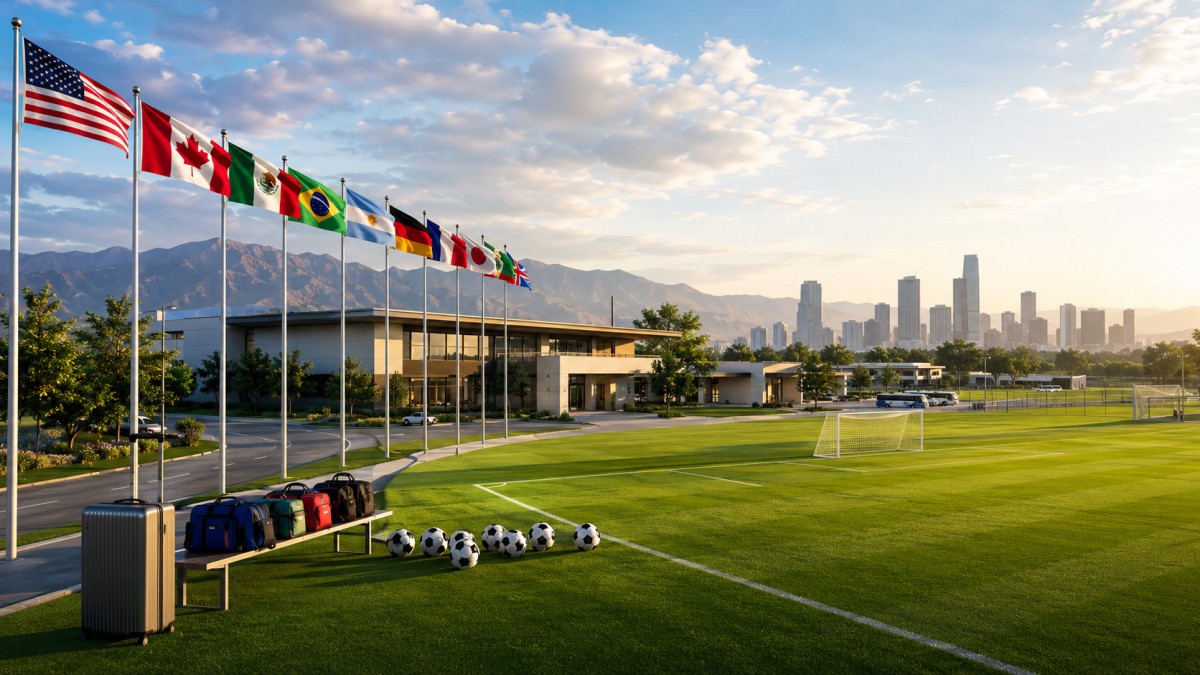
2026 FIFA World Cup Base Camps Confirmed Across North America
The road to the 2026 FIFA World Cup has already begun long before the opening whistle is blown. FIFA has officially confirmed the training base camps for all 48 participating nations, providing the clearest picture yet of how teams will prepare for the largest World Cup in football history.
The tournament, scheduled from June 11 to July 19, 2026, will span across the United States, Mexico, and Canada. While fans are focused on stadiums and match schedules, the confirmed base camps reveal another important layer of the competition — where teams will live, train, recover, and strategize during the tournament.
This massive logistical operation will transform universities, sports complexes, MLS facilities, and elite academies into temporary national team headquarters for more than a month.
FIFA Expands World Cup Infrastructure for 48 Teams
The 2026 edition marks a historic expansion of the FIFA World Cup from 32 to 48 nations. As a result, FIFA had to dramatically increase infrastructure support across North America.
A total of 25 communities across the three host nations will accommodate the competing teams. The United States emerged as the dominant hub, with 39 nations choosing American cities as their operational bases.
Mexico will host seven national teams, while Canada will serve as the group-stage home for two countries.
2026 FIFA World Cup Overview
- Tournament Dates: June 11 – July 19, 2026
- Total Teams: 48 Nations
- Host Countries: United States, Mexico, Canada
- Total Host Cities: 16
- Confirmed Base Camp Communities: 25
- Teams Based in USA: 39
- Teams Based in Mexico: 7
- Teams Based in Canada: 2
Why Base Camps Matter in the FIFA World Cup
A World Cup base camp is far more than a luxury hotel or temporary training field. These sites become the operational heart of every national team throughout the competition.
Players recover after matches, medical teams monitor fitness, coaches conduct tactical sessions, and staff coordinate travel logistics from these locations.
Because matches are spread across a continent-sized region, selecting the right base camp can provide competitive advantages including:
- Reduced travel fatigue
- Better climate adaptation
- Familiar training conditions
- Privacy and security
- Access to elite facilities
Many teams strategically selected camps near major airports and within proximity to likely match venues.
Kansas City Emerges as a Major Football Hub
One of the biggest surprises from FIFA’s official list is the rise of Kansas City as a preferred destination among elite nations.
Defending champions Argentina selected Sporting KC Training Centre as their headquarters. England also chose Kansas City, using Swope Soccer Village, while Algeria and the Netherlands will train nearby as well.
This concentration of football powerhouses highlights the city’s growing reputation as a soccer destination in North America.
Kansas City’s Major World Cup Teams
Argentina, England, Algeria, and the Netherlands all selected Kansas City-area facilities for their 2026 FIFA World Cup preparation camps, making it one of the busiest football hubs during the tournament.
Major Nations Select Elite American Facilities
Several global football giants selected high-performance facilities across the United States.
Brazil will operate from the New York-New Jersey area at Columbia Park Training Facility. France selected Bentley University near Boston, while Germany will train at Wake Forest University in Winston-Salem.
The United States national team will base itself at Irvine’s Great Park Sports Complex in California.
Meanwhile, Portugal chose Palm Beach Gardens in Florida, and Belgium selected Seattle Sounders FC’s advanced performance center in Renton.
These choices reflect a growing trend of national teams favoring MLS-linked facilities and NCAA campuses equipped with modern sports science infrastructure.
Mexico Remains a Strategic Destination
Despite the majority of teams choosing the United States, Mexico secured several important national teams.
Colombia and Korea Republic will prepare in Guadalajara, utilizing facilities connected to Liga MX clubs Atlas and Chivas respectively.
Tunisia selected Monterrey’s Rayados Training Centre, while Uruguay chose Cancun’s Mayakoba Training Centre for its coastal environment and privacy.
Mexico’s own national team will stay at its long-established Centro de Alto Rendimiento (CAR) in Mexico City.
The altitude and warm-weather conditions in Mexico may help certain teams adapt faster for matches scheduled in similar climates.
Canada Hosts Key Group Stage Camps
Canada, one of the co-hosts, will house two national teams during the group stage.
The Canadian national team selected Vancouver’s National Soccer Development Centre as its base, while Panama will operate from New Tecumseth’s Nottawasaga Training Site in Ontario.
Although Canada hosts fewer camps overall, its modern infrastructure and cooler summer climate remain attractive for selected nations.
Smaller Nations Gain Global Spotlight
The base camp announcements also provide visibility to smaller football nations and lesser-known communities.
Countries like Cabo Verde, Curaçao, Jordan, Uzbekistan, and Iraq will temporarily transform local facilities into global football headquarters.
For many host communities, the economic and cultural impact could be significant. Teams often attract international media, fans, sponsors, and tourism during the tournament period.
Universities and sports organizations hosting national teams also benefit from global exposure
How Base Camps Benefit Local Communities
- Boost in local tourism and hotel occupancy
- International media attention
- Economic activity from fans and staff
- Global exposure for universities and training centers
- Long-term football infrastructure development
Travel Logistics Could Influence Tournament Success
The 2026 FIFA World Cup will be the most geographically expansive tournament ever staged. Teams may travel thousands of miles between matches.
As a result, minimizing travel exhaustion could become a decisive factor.
For example:
- East Coast teams may benefit from shorter domestic flights
- Teams in Mexico could gain altitude familiarity
- West Coast camps may reduce jet lag for Pacific nations
Sports scientists and logistics coordinators reportedly played a major role in selecting these locations.
Universities Play Central Role in FIFA 2026
One notable trend is the extensive use of university campuses.
Institutions such as Wake Forest University, UC Santa Barbara, Gonzaga University, Rutgers University, Bryant University, and the University of Portland will host national teams during the tournament.
These campuses offer controlled environments, professional-grade athletic facilities, and secure accommodations ideal for elite-level preparation.
This partnership between FIFA and educational institutions also strengthens football’s footprint across North America.
World Cup Fever Already Building
Even though the tournament remains weeks away, the confirmation of base camps marks an important milestone in FIFA’s preparations.
Communities across North America are now preparing to welcome some of the biggest stars in world football. Local governments, tourism boards, and sports organizations are expected to organize fan events and training access opportunities ahead of the tournament.
With Lionel Messi’s Argentina, England, Brazil, France, Germany, Portugal, and dozens of other nations now officially assigned to their operational headquarters, the countdown to the 2026 FIFA World Cup has entered a new phase.
The world’s biggest sporting event is no longer just about stadiums and fixtures. It is also about the cities, campuses, and communities that will serve as the heartbeat of the tournament behind the scenes.
Disclaimer
This article is based on officially released FIFA World Cup 2026 team base camp information available at the time of writing. Locations, facilities, and team arrangements may change before the tournament begins.
FAQ
Where will Argentina stay during the 2026 FIFA World Cup?
Argentina will base itself in Kansas City at the Sporting KC Training Centre.
Which country hosts the most FIFA World Cup 2026 base camps?
The United States hosts the majority, with 39 national teams choosing American facilities.
Why are World Cup base camps important?
Base camps serve as team headquarters where players train, recover, strategize, and prepare throughout the tournament.
Which teams selected Mexico as their base?
Teams including Colombia, Korea Republic, Tunisia, Uruguay, and Mexico selected facilities in Mexico.
When does the 2026 FIFA World Cup begin?
The tournament begins on June 11, 2026, and concludes on July 19, 2026.



3 thoughts on “2026 FIFA World Cup Base Camps Confirmed”