Widow’s Bay Episode 6 Delivers the Show’s Most Terrifying Reveal Yet
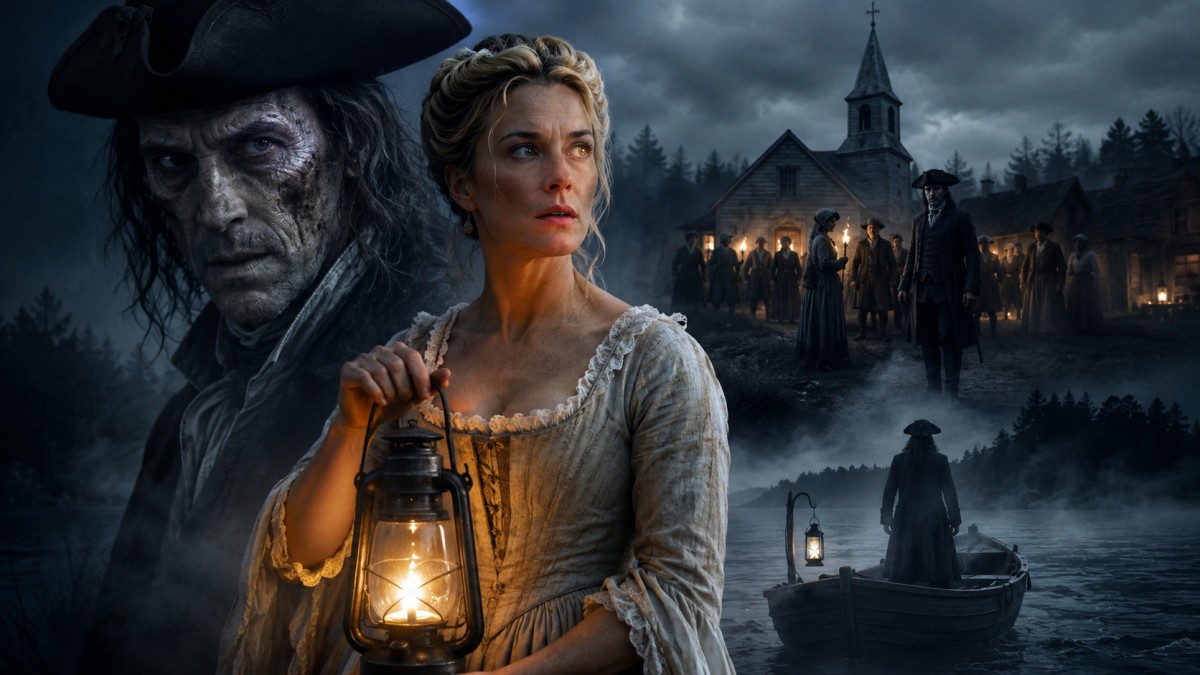
After weeks of suspense, unanswered questions, and supernatural mystery, Widow’s Bay finally reveals the horrifying truth hiding beneath its cursed island. Episode 6 takes viewers back to the year 1702 and uncovers the origin of the darkness that has haunted the town for centuries.
The episode marks a major turning point for the series. Instead of continuing the present-day storyline, the show fully embraces a colonial-era horror narrative that feels haunting, emotional, and deeply unsettling. Through eerie visuals, disturbing mythology, and powerful performances, the episode transforms Widow’s Bay into something far more ambitious than a traditional supernatural thriller.
At the center of the story is Richard Warren, a man once celebrated as the island’s heroic founder. Episode 6 reveals that the truth is far darker than anyone imagined.
A Bold Colonial Flashback Changes Everything
Series creator Katie Dippold described the episode as a “dry colonial horror period piece,” and that unusual creative direction gives the chapter its unique identity.
The story follows Sarah, played by Betty Gilpin, who arrives on Widow’s Bay after marrying a man she barely knows. She enters the island hopeful about her future, only to discover a terrifying reality hidden beneath the town’s quiet exterior.
As Sarah settles into her new life, she slowly realizes the people around her are hiding disturbing secrets. Her husband, Richard Warren, becomes increasingly frightening as supernatural events begin unfolding across the isolated settlement.
Unlike many horror dramas that depend entirely on violence or jump scares, Episode 6 builds tension through psychological fear and emotional discomfort. The episode explores themes of loneliness, social pressure, and isolation alongside its supernatural storyline.
Dippold explained that awkward human interactions can sometimes feel more terrifying than monsters themselves. That emotional realism gives the episode a chilling sense of authenticity.
Betty Gilpin Says Filming Felt Surreal
Behind the scenes, the cast experienced an atmosphere that was just as eerie as the episode itself.
Betty Gilpin revealed that filming often felt like “being ghosts in somebody else’s house” because the production used modern sets from the main series while actors remained dressed in full 18th-century costumes.
The unusual contrast created bizarre moments during filming. Actors would take breaks on contemporary sets while still wearing colonial wigs, corsets, and heavy historical clothing.
Gilpin praised the crew for transforming the production into a believable colonial nightmare despite filming late in the season after months of work on the regular storyline. She credited the hair, makeup, costume, and camera departments for delivering what she called “opus-level work.”
Several scenes were also filmed at the historic Rebecca Nurse Homestead, a real property connected to the Salem Witch Trials.
Rebecca Nurse was famously accused of witchcraft in 1692 before being executed and later cleared of the charges. Shooting at the historic location added a deeply unsettling atmosphere to the production.
Gilpin recalled wandering around the property in colonial clothing and accidentally scaring crew members while walking through the historic house.
The Horrifying Truth Behind Widow’s Bay
The biggest revelation of Episode 6 centers around the island’s terrifying curse.
Richard Warren, portrayed by Hamish Linklater, unknowingly unleashes evil after consuming a mysterious mushroom growing from the island’s frozen ground. That act leads him into a demonic pact that permanently binds the island’s residents to Widow’s Bay.
From that moment forward, nobody born on the island can truly escape.
Anyone attempting to leave beyond the surrounding waters dies instantly, turning to dust before they can survive outside the cursed territory.
The episode also reveals that the town’s history has been manipulated for generations. Richard Warren was remembered as a heroic founding figure even though he was directly responsible for the island’s suffering.
This revelation completely changes the audience’s understanding of the series. The curse is no longer just a supernatural mystery — it becomes a story about guilt, lies, fear, and the dangerous consequences of desperate choices.
Hamish Linklater’s Performance Elevates the Horror
Much of the episode’s emotional weight comes from Hamish Linklater’s portrayal of Richard Warren.
Rather than presenting Richard as a one-dimensional villain, the series shows him as a tragic and deeply damaged figure slowly consumed by darkness.
Throughout most of Episode 6, Richard remains hidden in shadows while psychologically tormenting Sarah. The show carefully delays revealing his full undead appearance until Episode 7, increasing the suspense and fear surrounding the character.
Linklater explained that many of Richard’s disturbing physical movements and vocal performances were created naturally without relying heavily on digital effects.
The production instead used detailed prosthetics, wigs, fake teeth, and decayed costumes to create the horrifying colonial appearance.
One bizarre yet memorable scene features Richard aggressively eating multiple cans of Vienna sausages during a tense boat sequence. Linklater joked that filming the scene may have been the greatest acting challenge of his career because of how unpleasant the experience became.
Episode 7 Pushes the Story Into Chaos
While Episode 6 focuses on the curse’s origin, Episode 7 explores the horrifying consequences in the present-day storyline.
Modern characters Tom, Wyck, and Patricia eventually discover Richard Warren’s buried body. Once awakened, the undead Richard unleashes chaos across the island once again.
At first, Richard appears willing to accept death. However, during a violent boat confrontation, he suddenly fights desperately for survival and attacks Tom and Wyck.
The dramatic sequence ends with the group forcing Richard back into his coffin.
Ironically, Linklater filmed the intense burial scene on his 49th birthday. The actor later reflected on the strange experience of screaming “I want to live!” while portraying a man being buried alive.
Horror and Comedy Create a Unique Identity
One reason Widow’s Bay stands apart from many modern horror shows is its unusual balance of terror and comedy.
Gilpin explained that filming sometimes felt like moving between completely different genres. One moment resembled a serious historical drama like The Crucible, while the next felt closer to a slasher film or dark comedy.
That unpredictable tone gives the series a distinctive personality.
Creator Katie Dippold has also been praised for grounding the supernatural horror in genuine emotional pain. Many scenes work because the characters feel human even while confronting impossible horrors.
One especially emotional moment involves Sarah attempting to connect with Richard despite suspecting he may no longer be fully human. Beneath the terror, the series quietly explores loneliness, shame, and the desire to still be accepted despite becoming monstrous.
Why Episode 6 Is the Series’ Biggest Turning Point
Episode 6 completely reshapes the mythology of Widow’s Bay.
The island’s curse is no longer just background mystery material — it becomes the emotional core of the story. The episode reveals how fear and desperation poisoned the town generations ago, creating a nightmare that continues into the present day.
The colonial flashback also gives deeper meaning to several modern characters, particularly Mayor Tom Loftis, who spent years comparing himself to Richard Warren without knowing the horrifying truth behind the legend.
Most importantly, the episode proves the creative team is willing to take major storytelling risks. Dedicating an entire chapter to historical horror could have failed, but instead it delivered one of the strongest and most memorable episodes of the season.
With Episodes 6 and 7, Widow’s Bay evolves from a mysterious supernatural drama into a haunting exploration of fear, guilt, and generational curses.
The colonial atmosphere, emotionally layered storytelling, and standout performances from Betty Gilpin and Hamish Linklater elevate the series far beyond a standard horror show.
By blending psychological tension, dark humor, and supernatural mythology, the series creates a chilling experience that lingers long after the episode ends.
As the story moves forward, viewers are left with one terrifying question: can anyone truly escape Widow’s Bay, or is the island destined to trap its victims forever?
Disclaimer
This article is intended for informational and entertainment purposes only. All rights related to Widow’s Bay, its characters, and production materials belong to the respective creators, studios, and distributors.
Image Generate AI Tool

2 thoughts on “Widow’s Bay Episode 6 Exposes the Island’s Dark Curse”