For years, the Audi R8 stood as the brand’s ultimate expression of performance, combining everyday usability with supercar-level excitement. When production of the R8 ended, many enthusiasts wondered whether Audi would ever build another flagship performance machine capable of capturing the same imagination.
Now, Audi has answered that question in spectacular fashion.
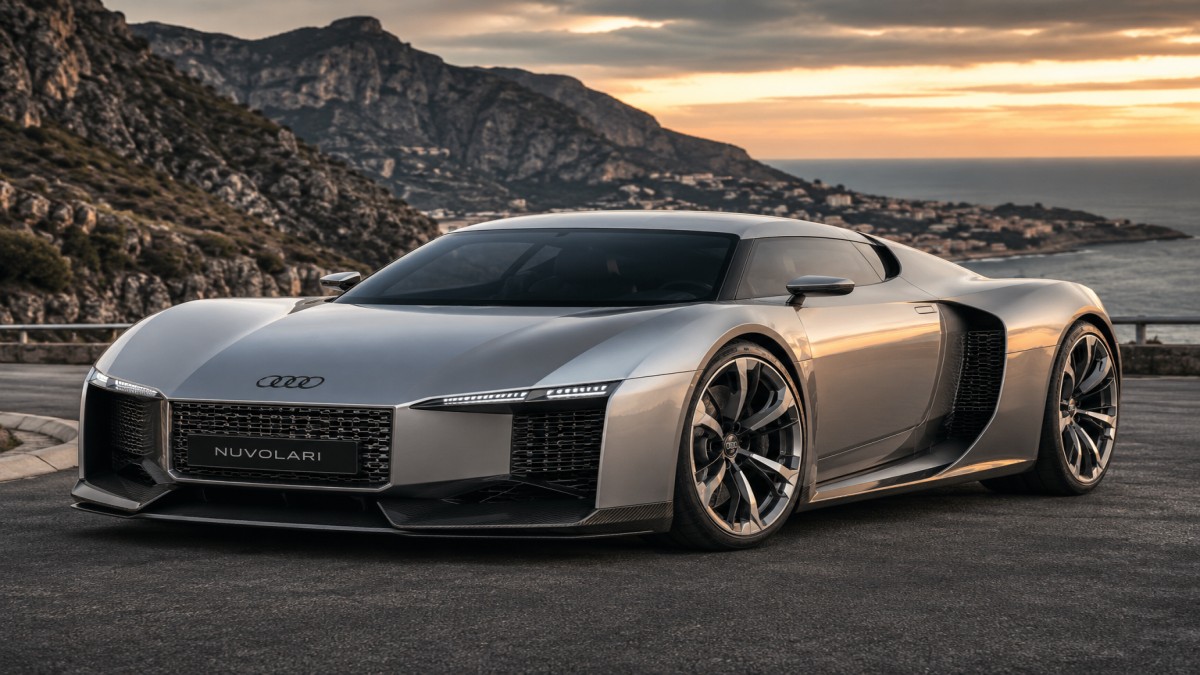
Introducing the Audi Nuvolari, a limited-production hybrid supercar that combines Formula One-inspired engineering, advanced electrification, and breathtaking design into a machine capable of producing 1,001 horsepower and reaching a top speed of 217 mph. More than just a replacement for the R8, the Nuvolari represents a bold statement about Audi’s future and its ambitions in the world of high-performance automobiles.
A Name Rooted in Motorsport History
The Nuvolari name carries significant weight in racing history. Audi chose it to honor Tazio Nuvolari, widely regarded as one of the greatest racing drivers of all time. During the golden age of motorsport, Nuvolari became famous for his fearless driving style and remarkable victories against seemingly unbeatable competition.
By reviving this legendary name, Audi creates a bridge between its historic racing heritage and its modern ambitions, including its growing presence in Formula One.
The result is a vehicle that celebrates both the brand’s past and its future.
Limited Production, Unlimited Exclusivity
Audi has confirmed that only 499 examples of the Nuvolari will be built worldwide.
With a price tag exceeding half a million pounds, the car instantly enters the realm of ultra-exclusive supercars. Production numbers are fixed, making ownership an opportunity reserved for a select group of collectors and enthusiasts.
Deliveries are expected to begin within the next year, and the model will be offered exclusively in left-hand-drive configuration.
The limited production run ensures that the Nuvolari remains one of the rarest and most desirable Audis ever created.
Hybrid Power Meets Extreme Performance
At the heart of the Audi Nuvolari lies an advanced plug-in hybrid powertrain that combines traditional combustion performance with cutting-edge electric technology.
The centerpiece is a mid-mounted 4.0-liter twin-turbocharged V8 engine capable of generating 800 horsepower. This remarkable engine is engineered to rev all the way to 10,000 rpm, an extraordinary figure for a modern road car.
Supporting the V8 are three high-performance electric motors:
- One motor positioned between the engine and transmission
- Two motors mounted at the front axle, one for each wheel
Each motor contributes up to 150 horsepower, creating a combined system output of 1,001 horsepower.
Although the theoretical total of all power sources exceeds that figure, the different operating characteristics of the combustion engine and electric motors result in a calibrated maximum system output of 1,001bhp.
Regardless of the calculation, the performance is nothing short of astonishing.
Supercar Acceleration with Hypercar Numbers
Performance figures place the Nuvolari among the fastest production cars in the world.
Audi claims the car can accelerate from 0 to 125 mph in just 6.8 seconds. That level of acceleration was once reserved for the most exotic hypercars ever built.
The top speed is equally impressive at 217 mph, allowing the Nuvolari to compete directly with some of the most powerful and expensive vehicles on the market.
Yet Audi insists the car is not solely focused on straight-line speed. Engineers have worked extensively to ensure that the Nuvolari delivers confidence, precision, and engagement whether it is tackling a racetrack or carving through mountain roads.
Carbon Fiber Construction Inspired by Formula One
Weight reduction plays a crucial role in achieving world-class performance.
To maximize strength while minimizing mass, Audi has constructed the Nuvolari’s body entirely from advanced pre-preg carbon fiber. This manufacturing method is commonly used in Formula One and aerospace applications because it allows engineers to optimize structural rigidity while keeping weight under control.
The process involves carefully layering carbon fiber sheets, vacuum sealing them, and curing them in an autoclave under extreme heat and pressure.
The benefits are substantial:
- Exceptional structural strength
- Reduced vehicle weight
- Greater aerodynamic flexibility
- Improved efficiency and handling
Despite incorporating a sophisticated hybrid system, the Nuvolari maintains a relatively low weight for a car of its capability, tipping the scales at approximately 1,750 kilograms.
Next-Generation Quattro Technology
Audi’s legendary Quattro all-wheel-drive system has evolved dramatically over the decades, and the Nuvolari showcases its most advanced form yet.
The new system, known as Quattro Predictive Ride, uses a combination of electric torque vectoring, intelligent traction management, and advanced sensor technology to maximize grip and stability.
The system continuously analyzes:
- Wheel movement
- Vehicle acceleration
- Steering input
- Road conditions
- Weight transfer
Using real-time calculations, the vehicle can distribute power and braking forces precisely where they are needed.
This allows the Nuvolari to remain stable under extreme acceleration, maintain composure through high-speed corners, and deliver exceptional confidence even when pushed to its limits.
Advanced Braking for Extreme Speeds
A vehicle capable of exceeding 217 mph requires an equally impressive braking system.
The Nuvolari features enormous 420mm carbon-ceramic brake discs paired with ten-piston calipers. These components provide immense stopping power while maintaining consistent performance under repeated high-speed use.
In addition to conventional braking, the hybrid system incorporates powerful regenerative braking technology that captures energy during deceleration and redirects it to the battery pack.
The combination of mechanical braking and regenerative systems creates a seamless experience that balances efficiency with performance.
A Different Approach to Supercar Design
Modern supercars often rely on aggressive styling, dramatic air intakes, oversized wings, and complex aerodynamic surfaces.
The Audi Nuvolari takes a different path.
Rather than emphasizing visual aggression, Audi’s designers focused on simplicity, proportion, and purity of form. The body features clean surfaces, sharp character lines, and carefully controlled details that create a powerful visual presence without unnecessary complexity.
This minimalist philosophy gives the car a timeless quality that distinguishes it from many contemporary rivals.
Every curve and edge serves a purpose, resulting in a design that feels sophisticated rather than exaggerated.
Aerodynamics Hidden in Plain Sight
Although the exterior appears remarkably clean, the Nuvolari incorporates a highly sophisticated aerodynamic package.
Airflow management plays a critical role in cooling the hybrid powertrain and generating downforce at high speeds.
Engineers have integrated numerous aerodynamic solutions into the bodywork, including:
- Precision-designed front air channels
- Advanced cooling pathways
- Functional side intakes
- Rear airflow optimization systems
A deployable rear wing provides additional downforce when required and can adjust its position depending on speed and driving conditions.
The system also includes a drag-reduction function similar to Formula One’s DRS technology, helping improve efficiency and top-speed performance.
According to Audi, the Nuvolari generates more effective downforce than several comparable high-performance rivals despite its cleaner appearance.
Luxury Meets Motorsport Technology
Inside, the Nuvolari combines race-inspired functionality with premium craftsmanship.
The cabin places the driver at the center of the experience while maintaining the refinement expected from a flagship Audi.
Key interior highlights include:
- Fully digital instrumentation
- A floating central touchscreen
- Precision-machined aluminum controls
- Premium upholstery materials
- Driver-focused ergonomics
Unlike many modern performance cars that prioritize technology over character, the Nuvolari incorporates tactile physical controls and carefully selected materials that create a sense of occasion every time the driver enters the cabin.
The result is an environment that feels both futuristic and authentically premium.
Developed at Remarkable Speed
One of the most fascinating aspects of the Nuvolari project is how quickly it came together.
A small group of engineers and designers reportedly proposed the concept directly to Audi’s leadership. Once approved, development accelerated rapidly, with a compact team working outside many of the company’s traditional structures.
The project remained surprisingly small, involving only a few dozen specialists at its peak.
Formula One engineers contributed their expertise throughout development, while professional racing drivers participated in refining the vehicle’s handling characteristics.
This streamlined approach allowed Audi to move faster than would typically be possible within a major automotive manufacturer.
More Than a Supercar
The Audi Nuvolari is not simply another high-performance vehicle entering an already crowded market.
It represents a shift in philosophy for Audi.
The car showcases the company’s new design language, demonstrates its engineering capabilities, and highlights the potential of hybrid performance technology at the highest level.
With 1,001 horsepower, a 217 mph top speed, advanced electrification, and a production run limited to just 499 units, the Nuvolari is positioned to become one of the most significant Audi models of the modern era.
For enthusiasts who believed the story ended with the R8, the Nuvolari proves that Audi’s performance journey is far from over. In many ways, it is only just beginning.
Disclaimer: This article is based on publicly available information and manufacturer claims regarding the Audi Nuvolari. Specifications, performance figures, pricing, and availability may change before production and customer deliveries begin
Image Credit: AI-Generated Illustration
Article Credit: Editorial Team | Adapted and rewritten from reporting by Top Gear