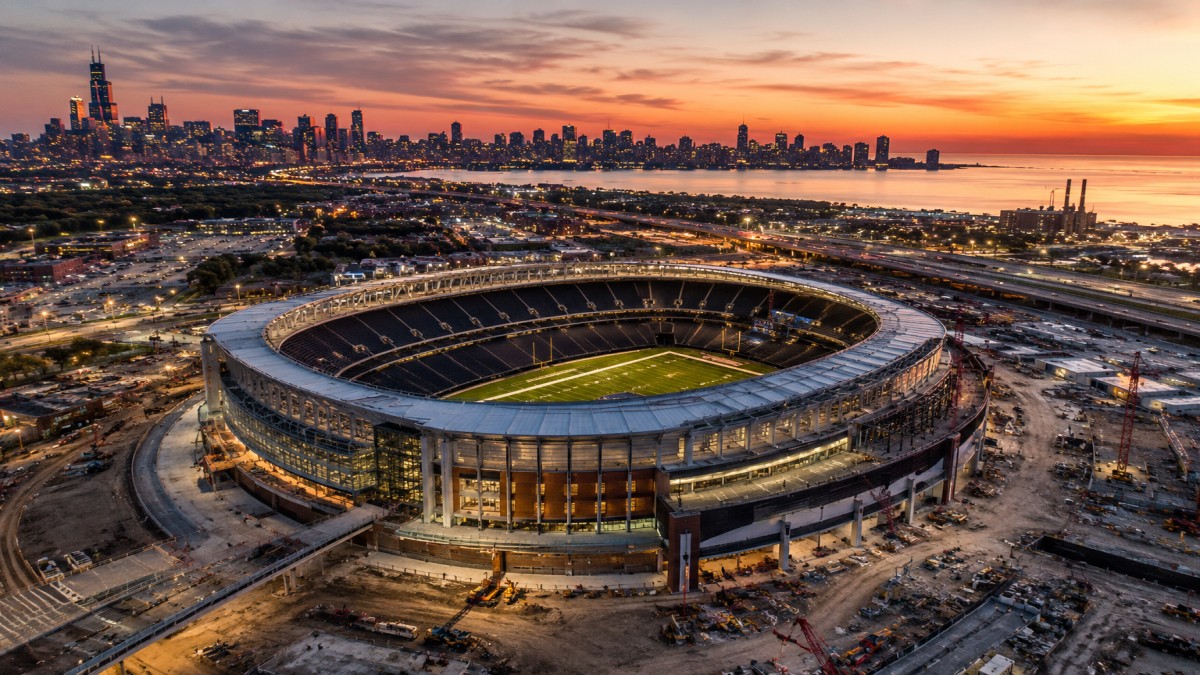
The Chicago Bears have taken a major step toward what could become one of the most significant relocations in franchise history, announcing plans to move forward with efforts to develop a new stadium in Hammond, Indiana. While the project remains in its early stages and a final site has not yet been selected, the decision marks a dramatic shift in the team’s long-running search for a modern home and raises new questions about the future of professional football in Illinois.
For more than a century, the Bears have been closely tied to Illinois, evolving from the Decatur Staleys into one of the NFL’s most recognizable franchises. Their latest announcement suggests that relationship may be entering a new chapter as team executives increasingly focus their attention across state lines.
Bears Leadership Highlights Regional Vision
In a statement released by Chairman George McCaskey, team leadership emphasized the broader economic and transportation benefits they believe a stadium development in Northwest Indiana could create.
According to the organization, a new stadium project would serve as more than just a sports venue. Team officials described the concept as a regional investment capable of connecting communities throughout the greater Chicago metropolitan area while generating economic opportunities for businesses and residents.
The announcement immediately intensified discussions surrounding the franchise’s future and the competition between Illinois and Indiana officials seeking to host the team’s next home.
Illinois Efforts Fall Short
The Bears’ decision comes shortly after Illinois lawmakers failed to advance legislation designed to improve the state’s chances of retaining the franchise.
In the closing days of the legislative session, state leaders attempted to pass measures that would have provided financial and structural incentives for stadium development projects. One proposal sought to create mechanisms allowing municipalities to establish special stadium authorities capable of owning and financing professional sports venues.
Supporters argued that such legislation would offer the Bears greater financial certainty while helping maintain the franchise’s presence in Illinois.
However, despite clearing one legislative hurdle, the proposal ultimately failed to receive final approval before the Bears’ self-imposed decision timeline.
That outcome significantly weakened Illinois’ negotiating position and created an opening for Indiana officials, who have spent months promoting Northwest Indiana as an attractive alternative.
Governor Pritzker Questions Team’s Direction
Following the Bears’ announcement, Illinois Governor JB Pritzker’s administration expressed frustration with the team’s changing approach throughout years of negotiations.
State officials suggested that multiple shifts in the organization’s stadium strategy have complicated efforts to reach a long-term agreement.
Despite the criticism, the governor’s office indicated that Illinois remains interested in continuing discussions and finding a solution that balances the team’s goals with taxpayer protections.
The state has consistently maintained that public funds should not be used directly to finance stadium construction, instead favoring approaches that provide tax certainty and infrastructure support.
Negotiations May Not Be Over
Although the Bears have publicly identified Hammond as their preferred direction, several Illinois leaders insist the situation remains fluid.
State Senator Bill Cunningham, who played a leading role in stadium negotiations, indicated that conversations with team executives are ongoing. According to Cunningham, the Bears’ latest statement does not necessarily represent a final decision but rather reflects the organization’s current focus.
His comments have fueled speculation that Illinois could still remain in contention if lawmakers develop a new package capable of meeting the franchise’s long-term objectives.
Local officials point out that previous statements from the Bears have evolved over time, suggesting that future negotiations could still alter the outcome.
Arlington Heights Dreams Face New Uncertainty
Perhaps no community has invested more time and energy into attracting the Bears than Arlington Heights.
The franchise’s purchase of the former Arlington Park property for approximately $197 million was widely viewed as a major step toward building a new suburban stadium. For years, many observers considered the site the leading candidate for the team’s future home.
Local leaders worked closely with the organization to prepare redevelopment plans and infrastructure improvements designed to support a large-scale entertainment district anchored by a modern football venue.
The recent shift toward Indiana has therefore generated disappointment among Arlington Heights officials, who believed years of planning had positioned the village favorably.
While the property remains under Bears ownership, uncertainty now surrounds how the site may ultimately be used if the team proceeds with an Indiana stadium.
Chicago Bears to Give Up
City officials in Chicago are also refusing to concede defeat.
Mayor Brandon Johnson’s administration noted that the Bears have explored multiple options over the years and emphasized that no construction has yet begun in Indiana.
City leaders maintain that Chicago remains a viable destination for a future stadium project and continue to advocate for keeping the franchise within city limits.
Supporters of a Chicago-based stadium argue that the team’s identity remains deeply connected to the city and that a new facility could generate significant tourism, economic activity, and development opportunities.
For now, officials say discussions will continue until a final agreement is reached elsewhere.
Cook County Officials Seek Common Ground
Cook County leadership echoed similar sentiments, stressing the importance of finding solutions that preserve the Bears’ legacy in Illinois while safeguarding public finances.
County officials indicated a willingness to remain engaged with both state leaders and team executives in hopes of identifying a mutually beneficial path forward.
The comments reflect a broader concern among Illinois policymakers about the potential economic and symbolic impact of losing one of the state’s most iconic sports organizations.
Financial Challenges Remain a Key Factor
One of the major obstacles facing stadium negotiations has been the financial structure surrounding existing sports facilities.
Soldier Field, the Bears’ current home, still carries substantial debt associated with renovations completed more than two decades ago.
The stadium’s financing history has complicated discussions about future investments and taxpayer involvement.
At present, the Bears continue to operate under a lease agreement that runs through 2033, although provisions exist that could allow the organization to exit earlier by meeting specific financial obligations.
These realities have played a significant role in shaping negotiations and influencing the team’s search for alternative locations.
Indiana Celebrates Potential Arrival
While Illinois leaders continue exploring options, officials in Indiana have welcomed the Bears’ announcement with enthusiasm.
Hammond Mayor Thomas McDermott Jr. described the project as a transformational opportunity for both the city and the broader Northwest Indiana region.
Supporters believe the arrival of an NFL franchise could generate substantial economic benefits through tourism, hospitality spending, infrastructure investment, and job creation.
Indiana Governor Mike Braun also praised the development, expressing confidence that a partnership with the Bears could produce long-term growth and increased visibility for the state.
For Indiana leaders, the project represents an opportunity to secure one of professional sports’ most recognizable brands while strengthening the region’s economic profile.
A Historic Franchise at a Crossroads
The significance of the stadium decision extends far beyond real estate and politics.
Founded in 1920, the Bears are among the NFL’s original franchises and have played a central role in the league’s development.
The team relocated from Decatur to Chicago in 1921 and eventually became one of professional football’s most influential organizations.
Over the decades, the franchise has produced legendary players, iconic moments, and a passionate fan base that spans generations.
The Bears played at Wrigley Field for decades before moving to Soldier Field in 1971. Since then, the stadium has served as the backdrop for countless memorable games and historic achievements.
Soldier Field itself remains one of the most recognizable venues in American sports. The stadium underwent major modernization efforts in the early 2000s while preserving elements of its historic architectural character.
In 2024, the venue celebrated its 100th anniversary, underscoring its enduring importance to Chicago’s cultural and sporting identity.
What Happens Next?
Despite the headline-grabbing announcement, significant questions remain unanswered.
The Bears have not finalized an exact location in Hammond, nor have they revealed detailed construction timelines, financing arrangements, or development plans.
Environmental reviews, infrastructure considerations, transportation planning, and public approvals could all influence the project’s trajectory.
Meanwhile, Illinois officials continue signaling their desire to keep the franchise within state borders, suggesting that negotiations are far from over.
For Bears fans, the coming months may prove pivotal. Whether the franchise ultimately builds a state-of-the-art stadium in Indiana, returns to negotiations in Illinois, or pursues another alternative altogether, the decision will shape the future of one of the NFL’s most storied organizations.
As discussions continue, one thing is certain: the Chicago Bears are standing at a historic crossroads, and the outcome could redefine the franchise’s identity for generations to come.
Disclaimer: This article is based on publicly available reports and official statements. Stadium plans and negotiations remain subject to change as discussions continue among stakeholders.
Image Credit: Concept Illustration / AI Generated