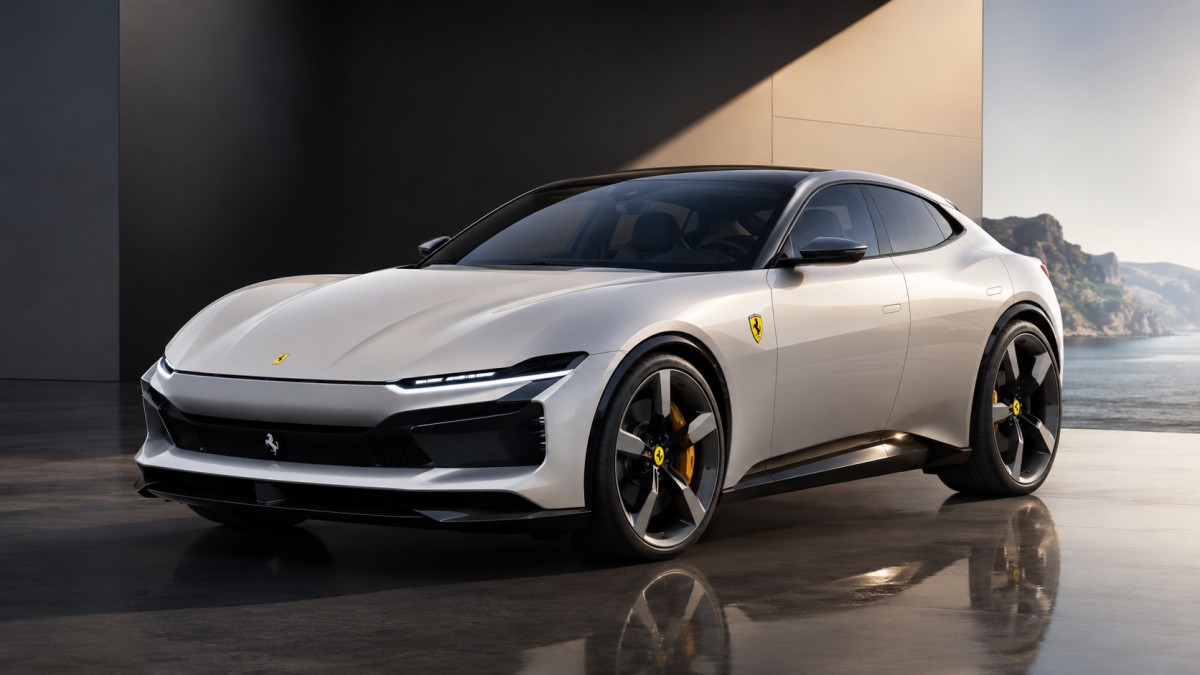
For nearly eight decades, Ferrari has built its identity around roaring combustion engines, race-bred engineering, and emotionally charged driving experiences. The sound of a Ferrari V12 or turbocharged V8 became more than a mechanical signature — it became part of automotive culture itself. Now, the legendary Italian automaker is stepping into entirely new territory with the unveiling of the Ferrari Luce, the company’s first fully electric production vehicle.
The Luce is not simply another luxury electric car entering an increasingly crowded market. It represents one of the most dramatic transformations in Ferrari’s modern history. From its dedicated EV platform and four-motor powertrain to its futuristic styling language and advanced aerodynamics, the Luce signals Ferrari’s attempt to prove that electrification does not have to come at the expense of excitement.
Scheduled to arrive in the United States in spring 2027, the Luce will become a cornerstone of Ferrari’s future lineup and one of the most closely watched luxury EV launches in the world.
Ferrari Enters the Electric Era
Ferrari has experimented with electrification before through hybrid models such as the SF90 Stradale and the 296 GTB, but the Luce marks the company’s first fully electric production car. Unlike previous electrified Ferraris that still relied on internal combustion engines, the Luce has been engineered from the ground up as a pure EV.
The launch comes at a pivotal moment for the automotive industry. Governments across Europe, North America, and parts of Asia continue tightening emissions regulations, while many luxury automakers are accelerating their transition toward electrification. Brands once deeply tied to gasoline performance — including Porsche, Maserati, Lamborghini, and Aston Martin — are all navigating the same challenge: how to preserve brand identity in the electric age.
Ferrari’s answer is the Luce.
Rather than imitate existing electric sedans or SUVs, Ferrari developed an entirely new architecture specifically for the vehicle. Engineers reportedly focused first on aerodynamic efficiency and chassis integration before finalizing the vehicle’s exterior styling. That engineering-first philosophy helped shape one of the most unconventional Ferraris ever produced.
A Radical New Design Language
At first glance, the Luce looks unlike any Ferrari that came before it. The car abandons many of the visual cues traditionally associated with the brand’s mid-engine supercars. Instead, the Luce embraces a sleek grand touring silhouette with flowing surfaces, minimal clutter, and a lower, wider stance.
The EV measures 197.6 inches in length, placing it in roughly the same size category as the Tesla Model S, though Ferrari says the Luce sits significantly lower than the Purosangue SUV. Its proportions were made possible by the dedicated electric platform, which allowed designers greater flexibility in cabin packaging and aerodynamic shaping.
Ferrari also collaborated with LoveFrom, the design firm founded by legendary former Apple designer Jony Ive and industrial designer Marc Newson. The partnership brought an unusual blend of automotive engineering and minimalist industrial design thinking into the project.
Rather than covering the vehicle with aggressive vents, spoilers, and exaggerated aerodynamic elements, Ferrari pursued a cleaner and more elegant approach. The company achieved a drag coefficient of just 0.254 without relying on active aerodynamic systems. Ferrari deliberately avoided heavy movable aero components to reduce complexity, save weight, and preserve smoother body surfaces.
The result is a car that appears futuristic without becoming overly experimental.
Four Motors and More Than 1,000 Horsepower
Despite its luxury-focused design philosophy, the Luce remains unmistakably a Ferrari when it comes to performance.
The vehicle uses four electric motors producing a combined 1,035 horsepower. Ferrari developed both the motors and the battery system in-house, underscoring the company’s intention to maintain technical control over the driving experience.
Each motor contributes to a sophisticated torque-vectoring system capable of distributing power independently across both axles. Ferrari says this setup delivers handling characteristics unlike any current production EV.
Electric vehicles are often criticized for feeling heavy or emotionally disconnected compared to traditional sports cars. Ferrari engineers reportedly spent years refining the Luce’s chassis response, steering calibration, and throttle behavior to preserve the sharpness expected from the brand.
While Ferrari has not yet released official acceleration figures, industry analysts expect the Luce to rival or surpass many of today’s fastest electric performance cars. Given its power output, the EV could potentially achieve 0–60 mph times below 2.5 seconds.
Advanced Battery and Charging Technology
Powering the Luce is a massive 122-kWh battery pack integrated directly into the vehicle’s chassis structure. Structural battery integration helps improve rigidity while lowering the car’s center of gravity, both of which are critical for handling performance.
The vehicle operates on an 800-volt electrical architecture, enabling extremely fast charging speeds of up to 350 kW. Under ideal conditions, drivers could potentially add significant range in less than 20 minutes.
Ferrari estimates the Luce will deliver approximately 330 miles of range under the WLTP testing cycle. In the United States, EPA estimates are expected to land closer to 280 miles.
While that range figure may not surpass every luxury EV competitor, Ferrari appears to be prioritizing performance consistency, weight balance, and dynamic capability over maximum range numbers.
The company’s approach reflects a broader philosophy within high-performance EV development: delivering repeatable driving performance rather than simply chasing the longest battery range possible.
Chassis Engineering Inspired by Ferrari Hypercars
The Luce may be electric, but Ferrari insists it remains deeply connected to the company’s racing and hypercar DNA.
The vehicle features four-wheel steering, allowing the rear wheels to turn slightly in coordination with the front wheels for improved agility at low speeds and greater stability at high speeds.
Ferrari also equipped the Luce with an advanced active suspension system inspired by the Ferrari F80 hypercar. The adaptive dampers incorporate technology developed for both the F80 and the Purosangue, enabling the EV to manage its substantial battery weight while preserving responsive handling.
Wheel sizes are equally dramatic. The Luce rides on enormous 23-inch front wheels and even larger 24-inch rear wheels. Buyers will be able to choose between traditional five-spoke wheels and turbine-inspired aerodynamic designs.
Ferrari claims the aero wheels reduce drag by approximately 5 percent, contributing to overall efficiency gains without sacrificing visual appeal.
A Ferrari Designed for Everyday Luxury
One of the most surprising aspects of the Luce is its practicality.
The EV becomes Ferrari’s first-ever five-seat production vehicle, expanding the company’s reach beyond traditional two-seat exotic sports cars. The larger cabin layout offers more passenger space and improved comfort, positioning the Luce as both a high-performance machine and a luxury grand tourer.
Inside, Ferrari has embraced premium materials and a more open cabin design philosophy. Though official interior images remain limited, the company says the Luce focuses heavily on craftsmanship, digital integration, and long-distance comfort.
Unlike many ultra-exclusive Ferrari halo cars produced in extremely limited numbers, the Luce will become part of Ferrari’s regular production lineup. That decision signals the company’s confidence that demand for luxury electric performance vehicles will continue growing throughout the decade.
Pricing Places the Luce at the Top of the Market
Ferrari is clearly targeting the highest tier of the luxury EV segment.
The Luce starts at approximately €550,000, or roughly $640,000 USD before customization and taxes. That price positions the EV far above most mainstream luxury electric cars and even beyond many high-end performance rivals.
However, Ferrari buyers rarely purchase vehicles in base configuration. Personalized paint finishes, bespoke interiors, custom materials, and performance options could easily push transaction prices significantly higher.
Orders for the Luce have already opened in Europe, and early interest appears strong despite lingering skepticism among some traditional Ferrari enthusiasts.
The Challenge of Preserving Ferrari’s Identity
The Luce represents more than a technological shift — it represents an emotional challenge for Ferrari itself.
For decades, Ferrari’s identity has been closely tied to the sound and drama of internal combustion engines. Many loyal enthusiasts remain uncertain whether an electric Ferrari can deliver the same emotional intensity as the company’s iconic V8 and V12 models.
Ferrari executives appear aware of those concerns. Rather than attempting to replicate fake engine sounds or imitate gasoline behavior, the company seems focused on creating a new kind of Ferrari experience built around instant response, precision handling, and futuristic design.
Whether customers fully embrace that vision remains one of the biggest questions surrounding the Luce.
Still, the broader industry trend suggests electrification is becoming unavoidable even for the world’s most prestigious performance brands. Ferrari’s decision to enter the EV market now may help the company maintain relevance and technological leadership as consumer expectations evolve.
A Defining Moment for Ferrari
The Luce could ultimately become one of the most important vehicles Ferrari has ever produced.
It is not merely the company’s first electric car — it is a statement about where Ferrari believes high-performance motoring is heading over the next decade. By combining over 1,000 horsepower, advanced chassis engineering, ultra-fast charging technology, and luxury-focused practicality, Ferrari is attempting to redefine what an electric grand tourer can be.
The success or failure of the Luce may shape Ferrari’s future strategy for years to come.
For now, one thing is certain: the unveiling of the Luce marks the beginning of a completely new chapter in Ferrari history.
Disclaimer:
This article is based on publicly available information, manufacturer announcements, and early specifications available at the time of writing. Final production details, pricing, performance figures, and availability may change before the Ferrari Luce officially launches in 2027.
Source:
Ferrari official announcements, automotive industry reports, and publicly released vehicle specifications.

One thought on “Ferrari Luce Redefines the Brand’s Electric Future”