Ford’s Secret $30K Electric Pickup Could Reshape the EV Industry
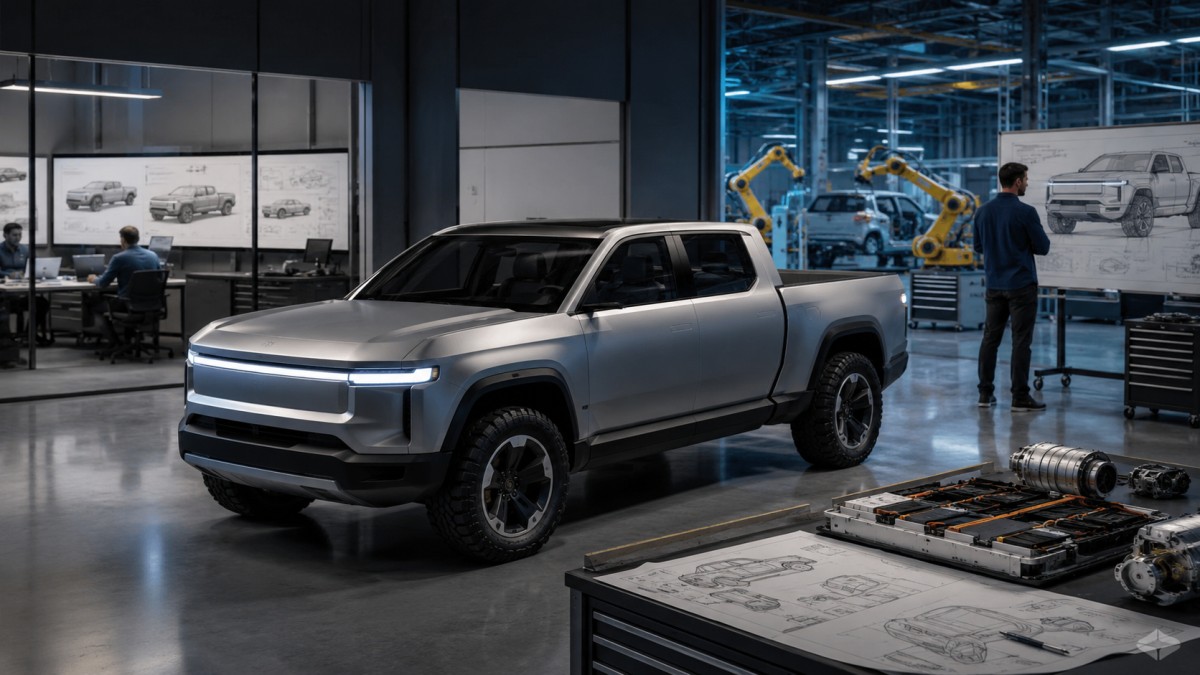
Ford Motor Company is quietly preparing one of the boldest moves in its modern history — a midsize electric pickup truck expected to start at around $30,000. Hidden behind the walls of a massive 250,000-square-foot facility in Long Beach, California, the project remained unknown to the public until recent reports revealed the company’s highly secretive effort to reinvent affordable electric vehicles.
The project is more than just another EV launch. For Ford, it represents a critical attempt to survive and compete in a rapidly changing automotive market increasingly influenced by low-cost Chinese electric vehicle manufacturers like BYD.
With production targeted for 2027 and nearly $2 billion already committed to factory upgrades in Kentucky, Ford is betting that affordable electric trucks could become the next major turning point in the global auto industry.
A Secretive “Skunkworks” Operation
Ford’s hidden California operation has reportedly been functioning like a classic Silicon Valley skunkworks lab — small teams, fast development cycles, simplified engineering, and a focus on cutting costs.
Unlike traditional automotive development programs that often take years and involve massive bureaucratic processes, this project appears designed for speed and flexibility. The Long Beach facility reportedly concentrates on four major goals:
- Faster vehicle development
- Simplified truck design
- Lower manufacturing costs
- More efficient production systems
The company has intentionally kept details extremely limited. No official prototype images have been released. Battery specifications, driving range, towing figures, payload capacity, and platform details all remain unknown.
That secrecy has only increased industry curiosity.
Ford CEO Jim Farley has reportedly described the project as a “Model T moment,” comparing the truck’s potential impact to the vehicle that helped make automobiles affordable for ordinary Americans over a century ago.
Why Ford Needs an Affordable Electric Truck
Ford already sells electric vehicles, including the Ford F-150 Lightning, but affordability has become a major problem across the EV industry.
Most electric pickup trucks currently available in the United States start above $50,000. While premium buyers have shown interest in high-end EV trucks, mainstream consumers remain hesitant due to pricing concerns.
Ford’s planned $30,000 starting price changes the equation entirely.
If successful, the truck could become one of the first genuinely affordable electric pickups produced by a major American automaker.
The timing is critical because Ford’s EV division has been losing enormous amounts of money. The company reportedly lost around $4.7 billion in its electric vehicle operations during 2024 alone.
Those losses have forced automakers to rethink EV strategies. Instead of building expensive luxury-focused electric vehicles, companies are now increasingly searching for ways to make affordable mass-market models profitable.
Ford’s new project appears to be exactly that — a direct attempt to lower prices while scaling production.
The Chinese EV Threat
One of the biggest reasons behind Ford’s urgency is the rapid rise of Chinese EV companies.
Manufacturers like BYD have dramatically changed the global EV market by producing extremely low-cost electric vehicles at scales many Western automakers still struggle to match.
BYD’s Seagull hatchback, for example, reportedly sells in China for under $10,000. The company has also introduced the Shark electric pickup for international markets, signaling growing ambitions beyond compact city cars.
Chinese automakers have achieved lower costs through several advantages:
- Large-scale battery production
- Lower manufacturing expenses
- Aggressive supply chain integration
- Government support
- Faster development cycles
At the moment, Chinese-made EVs face steep trade barriers in the United States, including a 100% tariff on imported Chinese electric vehicles.
Those tariffs currently protect American automakers from direct price competition. However, Ford appears to understand that global competition could intensify quickly if trade policies shift in the future.
By developing an affordable electric truck now, Ford may be trying to establish a strong market position before Chinese companies gain easier access to American buyers.
Kentucky Factory Transformation
Mass production for the upcoming electric pickup is expected to take place at Ford’s historic Louisville Assembly Plant in Kentucky.
The factory has operated since 1955 and has long been associated with traditional gasoline-powered vehicle production. Now, it is preparing for a major transformation into an EV manufacturing center.
In May 2026, Ford announced nearly $2 billion in investments to modernize the facility.
The upgrades reportedly include:
- New EV assembly lines
- Battery integration systems
- High-voltage safety infrastructure
- Workforce retraining programs
- Updated manufacturing technology
Retooling an existing plant instead of building a completely new factory could help Ford reduce costs and accelerate production timelines.
However, converting traditional auto plants into EV facilities is a massive challenge. Electric vehicles use fewer moving parts than gasoline vehicles, meaning production systems, supply chains, and workforce requirements all change significantly.
Labor Concerns Are Emerging
Ford’s affordable EV strategy also raises concerns among labor groups and workers.
Electric vehicles generally require fewer labor hours to build compared to gasoline-powered vehicles because they contain fewer mechanical components.
That creates uncertainty for workers represented by the United Auto Workers, commonly known as the UAW.
Neither Ford nor the union has publicly detailed how the Louisville transformation could affect employment levels, staffing structures, or future labor requirements.
The issue is becoming increasingly important across the automotive industry as automakers shift toward electrification.
While EV manufacturing creates new jobs in battery systems and software engineering, it can also reduce demand for some traditional assembly-line roles tied to engines and transmissions.
Ford will likely face pressure to balance cost reduction goals with commitments to American manufacturing jobs.
Image Credit: AI-generated illustration inspired by Ford’s upcoming affordable electric pickup project.
Can Ford Really Sell a $30,000 Electric Pickup?
The biggest question surrounding the project is simple: can Ford actually make money selling a $30,000 electric truck?
Industry analysts remain skeptical.
Battery costs remain one of the most expensive parts of EV production. Even though battery prices have gradually declined in recent years, affordable electric pickups remain difficult to produce profitably.
Experts note that Ford’s advertised starting price likely refers to a very basic base model with limited features.
Higher trims could quickly become much more expensive once buyers add:
- Larger battery packs
- Extended driving range
- Premium interiors
- Advanced technology packages
- Enhanced towing features
- Off-road upgrades
This pricing strategy is already common throughout the EV market. Automakers frequently advertise lower entry prices while most real-world purchases end up significantly higher.
Still, even a basic $30,000 electric pickup would represent a major milestone for the American EV industry.
Missing Details Continue to Fuel Speculation
Ford has not confirmed several critical details about the upcoming truck, including:
- Battery chemistry
- Estimated range
- Charging speed
- Payload ratings
- Towing capacity
- Drivetrain configuration
- Software platform
- Autonomous driving features
These unanswered questions matter because pickup truck buyers often prioritize utility and durability over technology alone.
A low price may attract attention, but long-term success will depend heavily on real-world capability.
If the truck cannot deliver competitive towing, hauling, or driving range performance, it may struggle against both gasoline trucks and higher-end EV competitors.
Ford therefore faces a difficult balancing act: keeping costs low while still meeting customer expectations for a modern pickup truck.
Why This Project Matters Beyond Ford
Ford’s affordable electric pickup could influence the entire American automotive industry.
For years, EV adoption has been slowed partly because many vehicles remain too expensive for average consumers. Affordable models have been limited, especially in the truck segment.
Pickup trucks are particularly important in the United States because they represent one of the country’s most popular vehicle categories.
If Ford successfully launches a practical electric pickup near the $30,000 mark, it could pressure competitors to accelerate their own affordable EV programs.
The project could also help determine whether large American automakers can compete with China’s rapidly expanding EV ecosystem.
The global EV race is no longer only about luxury technology or performance. Increasingly, it is becoming a battle over manufacturing efficiency, battery supply chains, and affordability.
Ford’s secret California project appears designed specifically for that new reality.
A High-Risk Gamble With Massive Stakes
Ford’s ambitious electric pickup strategy carries enormous risks.
The company must simultaneously solve several difficult problems:
- Reduce EV production costs
- Maintain profitability
- Compete with global rivals
- Preserve American jobs
- Scale manufacturing efficiently
- Meet customer expectations
- Adapt to changing government policies
The 2027 production target also leaves little room for delays.
Automotive development timelines are notoriously difficult, especially for entirely new vehicle platforms. Supply chain disruptions, battery shortages, economic uncertainty, or regulatory changes could all impact the project’s launch schedule.
At the same time, waiting too long could allow competitors to gain ground in the affordable EV market.
Ford appears willing to take that risk because the company understands the stakes may extend far beyond a single vehicle.
Affordable electric vehicles could determine which automakers dominate the next generation of transportation.
And Ford clearly does not want to be left behind.
Disclaimer
This article is based on publicly available reports, industry analysis, and officially announced investment details as of May 2026. Some specifications, pricing details, production timelines, and strategic plans discussed remain unconfirmed by Ford Motor Company and could change before the vehicle’s official launch.
Source
- Bloomberg industry reporting
- Ford Motor Company announcements
- Public statements from Ford CEO Jim Farley
- U.S. automotive industry analysis and EV market reports

One thought on “Ford’s Secret $30K Electric Pickup Could Change EVs Forever”