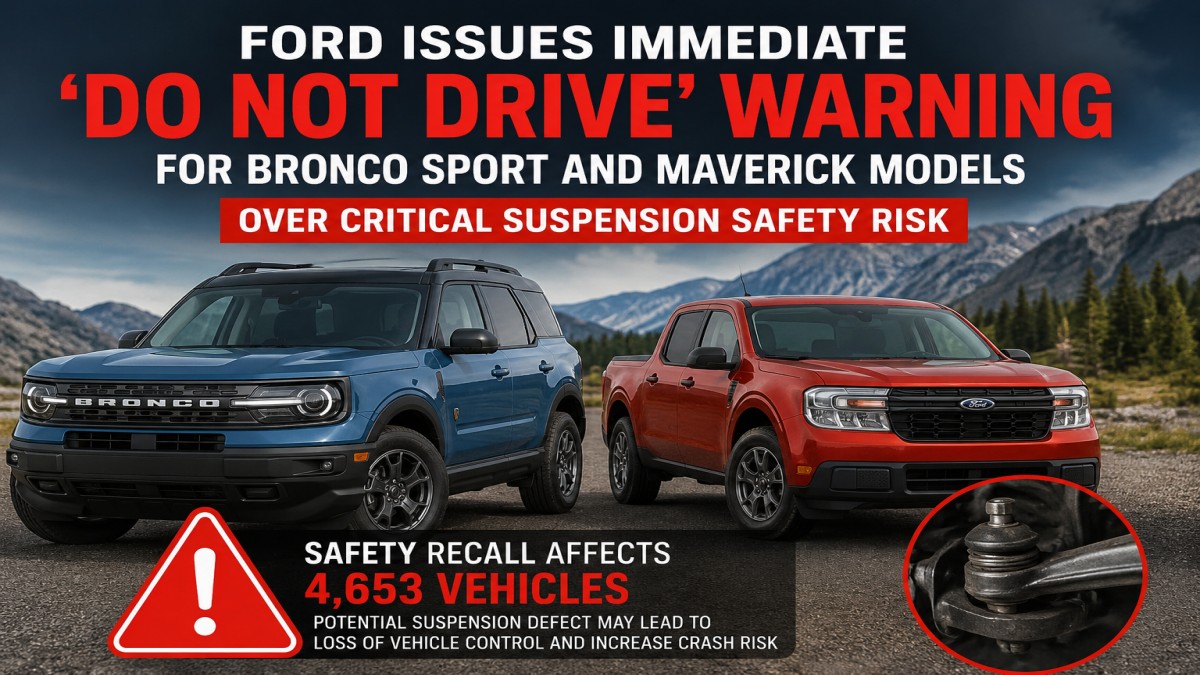
Ford Motor Company has announced an urgent safety recall affecting thousands of vehicles across the United States, accompanied by a rare and serious “Do Not Drive” advisory. The recall impacts specific model-year Ford Bronco Sport SUVs and Ford Maverick pickup trucks after the company identified a potentially dangerous suspension-related defect that could significantly increase the risk of a crash.
The recall affects 4,653 vehicles in total and was formally approved by the automaker in May 2026. According to federal safety documents, the issue centers on the front suspension system, specifically involving the lower control arm ball joints. If the defect is present, it could lead to reduced steering stability and, in severe cases, loss of vehicle control while driving.
Given the potential safety consequences, Ford is advising affected owners to stop driving their vehicles immediately until inspections and any necessary repairs have been completed.
What Triggered the Recall?
The recall stems from concerns that front lower control arm ball joints may not have been properly installed during vehicle assembly or could have been incorrectly repaired during manufacturing operations.
The lower control arm is a vital component of a vehicle’s suspension system. It helps maintain wheel alignment and supports safe steering and handling characteristics. If a ball joint becomes loose, separates, or fails, the vehicle’s steering response can be compromised.
Federal safety officials noted that the issue originated during production processes at Ford assembly facilities. Improper installation of these components may allow the suspension system to deteriorate prematurely or perform unpredictably under driving conditions.
As a result, drivers could experience reduced vehicle stability, abnormal handling, or complete loss of control in extreme situations.
Models Included in the Recall
The recall covers selected vehicles from the following model ranges:
- Ford Bronco Sport (2021–2026)
- Ford Maverick (2022–2026)
According to recall documents, the affected population includes:
- 2,296 Ford Bronco Sport vehicles
- 2,357 Ford Maverick vehicles
While the number of affected vehicles represents only a small percentage of total production, safety experts emphasize that any defect involving steering or suspension components deserves immediate attention.
Why Ford Issued a ‘Do Not Drive’ Advisory
Vehicle recalls are common within the automotive industry, but a “Do Not Drive” warning is relatively rare and reserved for situations where continued vehicle operation could create an elevated safety risk.
Ford’s decision to issue this advisory reflects the seriousness of the potential defect. Rather than simply encouraging owners to schedule repairs, the company is recommending that affected vehicles remain parked until they can be inspected by authorized technicians.
The automaker stated that a defective suspension component could potentially separate while the vehicle is in motion. Such a failure could significantly impact steering performance and increase the likelihood of a collision.
For drivers, passengers, and other road users, the consequences of a suspension failure can be severe, particularly at highway speeds.
Dealers Ordered to Halt Sales Immediately
In addition to notifying vehicle owners, Ford has instructed dealerships nationwide to stop selling, delivering, or demonstrating any affected vehicles that remain in inventory.
Federal regulations require dealers to comply with recall-related stop-sale orders immediately. This means affected vehicles cannot be sold as new until inspections and repairs have been completed.
The restriction applies not only to customer deliveries but also to showroom demonstrations and test drives.
Industry analysts note that stop-sale orders are an important tool for preventing potentially defective vehicles from entering public roads before corrective actions are taken.
Significant Financial Penalties for Non-Compliance
Federal authorities have attached strict compliance requirements to the recall.
Dealerships that ignore stop-sale directives and continue selling affected vehicles could face substantial financial penalties. Civil fines can reach tens of thousands of dollars per vehicle if dealers fail to comply with federal recall regulations.
Such penalties underscore the seriousness with which regulators view vehicle safety defects, especially those involving critical systems such as steering, suspension, braking, or airbags.
Ford Covering All Repair Costs
To minimize inconvenience for customers, Ford has confirmed that owners will not be responsible for any costs related to the recall.
The company will pay for:
- Vehicle inspections
- Required repairs
- Replacement parts
- Labor charges
Affected owners are encouraged to contact authorized Ford dealerships to determine whether their vehicle is included in the recall and to arrange service as soon as possible.
Ford’s commitment to covering all repair expenses is consistent with federal recall requirements, which generally obligate manufacturers to correct safety defects at no charge to consumers.
Towing Assistance Available
Recognizing that many owners may not feel comfortable driving potentially affected vehicles to dealerships, Ford has established support measures to help customers safely complete the recall process.
Participating dealerships are authorized to provide towing assistance when necessary.
Dealers can submit claims for towing services up to a specified reimbursement amount per vehicle, helping ensure owners are not burdened with transportation costs related to the recall.
In some cases, dealerships may also dispatch technicians directly to customers’ homes or workplaces to perform inspections. This mobile service option could reduce inconvenience while ensuring affected vehicles are evaluated promptly.
Rental Vehicles Offered for Certain Repairs
Ford has also implemented customer-support programs for situations where repairs require replacement components or extended service time.
If technicians determine that parts replacement is necessary, affected owners may qualify for rental vehicle assistance.
The company has pre-approved rental vehicle coverage for eligible customers for up to 30 days while repairs are being completed.
This measure is designed to help owners maintain transportation access during the repair process and reduce disruption to daily activities.
Reimbursement Program for Previous Repairs
Another key aspect of the recall involves reimbursement for customers who may have already paid out-of-pocket to address the suspension issue before the official recall announcement.
Ford has established a reimbursement program allowing eligible owners to recover repair expenses if qualifying work was completed before the recall deadline.
Customers who previously repaired the affected suspension components are encouraged to retain invoices, receipts, and service documentation. These records may be required when submitting reimbursement requests.
Programs like these are common in major safety recalls and help ensure consumers are not financially disadvantaged by defects later identified by manufacturers.
Impact on Ford’s Reputation
Ford remains one of the largest automakers in North America and has invested heavily in expanding both its SUV and pickup truck lineups in recent years.
The Bronco Sport and Maverick have become particularly important products for the company.
The Bronco Sport has attracted buyers seeking compact SUV capability combined with outdoor-focused styling and versatility. Meanwhile, the Maverick has gained popularity as an affordable compact pickup offering strong fuel efficiency and practical everyday utility.
Because both vehicles play important roles in Ford’s product portfolio, the company is likely to prioritize rapid completion of inspections and repairs to maintain customer confidence.
Industry observers note that while recalls can temporarily affect public perception, transparent communication and quick corrective action often help manufacturers preserve consumer trust.
What Owners Should Do Next
Owners of 2021–2026 Ford Bronco Sport and 2022–2026 Ford Maverick vehicles should determine immediately whether their vehicle is included in the recall.
Recommended steps include:
- Check recall notices from Ford.
- Contact an authorized Ford dealership.
- Verify the vehicle identification number (VIN).
- Follow instructions regarding inspections and repairs.
- Avoid driving the vehicle if it is confirmed to be affected.
Drivers experiencing unusual steering behavior, suspension noises, wheel alignment problems, or handling instability should seek professional evaluation immediately.
Ford’s latest recall highlights the importance of proactive vehicle safety monitoring and rapid response when potential defects are identified. The company’s unusual “Do Not Drive” advisory reflects concerns that improperly installed suspension components could increase crash risks and compromise driver control.
Although the recall affects fewer than 5,000 vehicles, the seriousness of the potential defect has prompted extensive corrective measures, including free inspections, repairs, towing assistance, rental vehicle coverage, and reimbursement programs.
Affected Bronco Sport and Maverick owners are urged to act quickly, verify their vehicle status, and arrange inspections as soon as possible. By addressing the issue promptly, Ford aims to reduce safety risks and ensure impacted vehicles return to the road only after meeting the company’s safety standards.
Disclaimer:
This article is a rewritten news report based on publicly available recall information and regulatory documents. Vehicle owners should consult official Ford communications and recall notices for the most accurate and up-to-date guidance regarding affected vehicles and repair procedures.