Wendy Williams is back in the public eye, and her latest appearance has once again drawn attention to the former talk show host’s long-running fight over her guardianship.
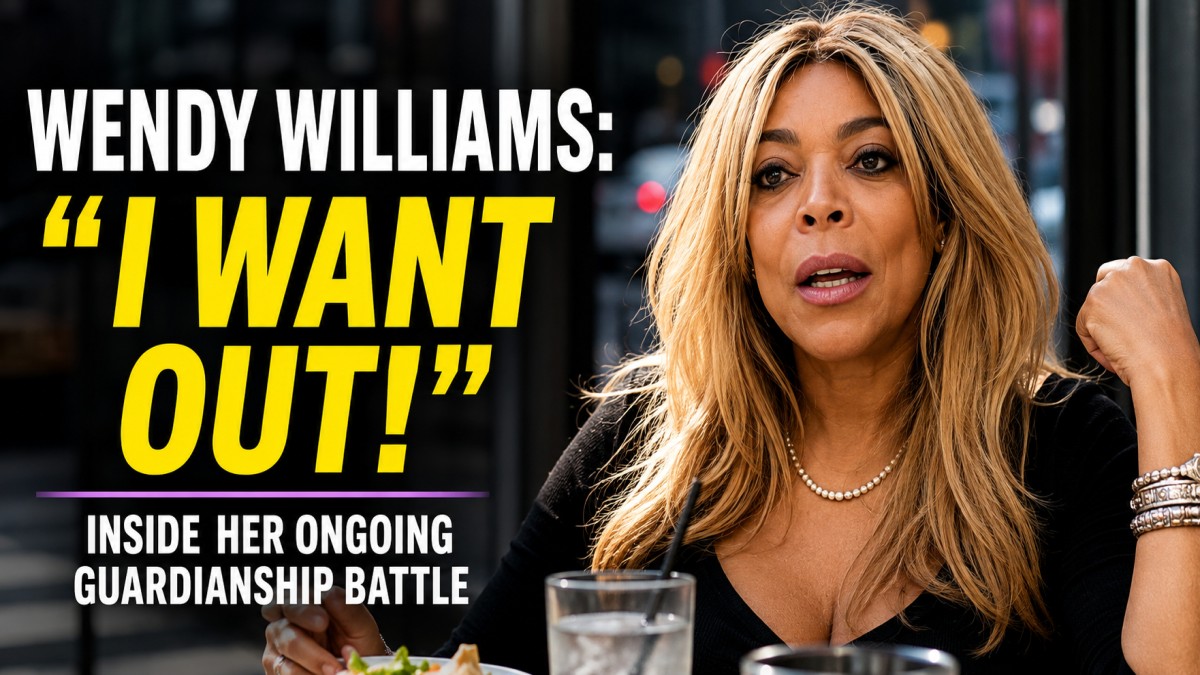
The 62-year-old television personality was reportedly seen having lunch at a New York City restaurant on August 20, marking her first known public appearance in roughly six months. According to reports, Williams was asked about what she wants people to understand about her current situation and allegedly responded with a blunt message: “I want out!”
Her brief outing comes as questions surrounding her health, independence and court-appointed guardianship continue to generate public interest. Williams has repeatedly expressed a desire to regain greater control over her life, while her legal situation remains tied to ongoing assessments of her capacity and care.
Wendy Williams’ Rare Return to the Public Eye
Williams has largely remained away from the spotlight in recent years, a major change for a broadcaster who spent decades building a career around being outspoken and highly visible.
Her latest New York appearance is therefore notable not simply because she was seen outside her residence, but because it comes after months without a comparable public sighting.
The reported lunch outing also provides another glimpse into Williams’ determination to remain involved in conversations about her own life. Her alleged statement, “I want out,” immediately renewed attention on the guardianship arrangement that has surrounded her for years.
The comment should be understood in the context of Williams’ previously expressed desire for independence rather than as evidence that a court has changed her legal status. As of the latest reports, her guardianship remains in place.
Williams’ supporters have continued to follow developments closely because the legal arrangement has been one of the most controversial chapters of her post-talk-show life.
Why Wendy Williams Is Under Guardianship
Williams’ guardianship battle dates back to concerns about her financial and cognitive well-being.
In 2022, Wells Fargo reportedly froze Williams’ accounts and sought a financial guardianship, citing concerns that she could potentially be experiencing financial exploitation or undue influence. The dispute eventually resulted in a court-appointed guardianship covering aspects of her financial and medical affairs.
The legal arrangement has remained a source of tension for Williams and people close to her.
For Williams, the issue is about more than money. She has publicly expressed frustration with restrictions surrounding her independence and has argued that she should have a greater say in decisions affecting her daily life and future.
That tension has made every new public appearance significant because it offers another opportunity for Williams to communicate directly, even briefly, with the public.
Her Aphasia and Frontotemporal Dementia Diagnosis
Williams’ health became an even bigger part of the story in February 2024, when her care team publicly confirmed that she had been diagnosed with primary progressive aphasia and frontotemporal dementia (FTD).
The announcement stated that Williams received the diagnoses in 2023 following extensive medical testing at Weill Cornell Medicine. Her representatives said the conditions had created significant challenges involving communication and cognitive functions.
It is important to clarify the timeline because some reports have described the diagnosis as occurring in February 2024. The public announcement was made on February 22, 2024, but Williams’ care team said she had actually received the diagnoses in 2023.
Primary progressive aphasia can affect a person’s ability to communicate, including speaking, understanding language and finding words. Frontotemporal dementia is associated with changes involving behavior, personality, executive functioning and language.
Williams’ representatives also emphasized that she was still able to do many things for herself and continued to maintain her trademark sense of humor when the diagnosis was announced.
The decision to make her medical situation public was presented as an effort to correct speculation surrounding her health while also increasing awareness of aphasia and FTD.
A Long History of Health Challenges
Williams’ recent struggles did not begin with her dementia diagnosis.
Over the years, she was open about several health issues, including Graves’ disease and lymphedema. Graves’ disease, an autoimmune disorder involving the thyroid, was one of the health conditions she discussed publicly during her years on television.
Those challenges eventually contributed to her decision to step away from The Wendy Williams Show, the daytime program that turned her into one of the most recognizable personalities in American television.
The show premiered in 2008 and became known for Williams’ direct style, celebrity interviews and trademark commentary. Her catchphrase, “How you doin’?” became closely associated with her television persona.
By the time her television career came to an end, however, Williams’ health had become a major concern.
Her absence from daytime television created a sharp contrast with the years when she appeared in front of millions of viewers virtually every weekday.
Williams Has Previously Spoken About Wanting Freedom
The latest reported statement is not the first time Williams has expressed frustration about her guardianship.
In 2025, she reportedly discussed her desire to regain her independence and return to work. Around her 61st birthday that year, Williams was reported to have described freedom from the guardianship as her primary wish.
She has also previously described the facility where she has been living as a “luxury prison,” a phrase that became part of the larger public discussion about her circumstances.
Those comments have fueled an ongoing debate about how much independence someone should retain while receiving care for serious cognitive conditions.
Williams’ situation is particularly complicated because her wishes and her medical and legal circumstances can overlap in difficult ways. A person can express a desire for independence while courts and medical professionals may still have concerns about whether that person can safely manage certain decisions.
That is one reason the legal process surrounding Williams has continued for so long.
What Happens Next in Wendy Williams’ Legal Battle?
The latest reports indicate that Williams’ legal team continues to work through questions surrounding her cognitive abilities and legal capacity.
Ending or changing a guardianship is ultimately a legal matter, meaning a public statement or appearance does not automatically alter the court’s orders.
Evaluations and court proceedings can take time, particularly when questions involve medical conditions that may affect cognition, communication or decision-making.
For Williams, however, the desire to have her voice heard remains central to the story.
Her reported words during the August 20 outing are likely to receive considerable attention precisely because she has spent so much of her career speaking directly to the public. Even a short comment can carry considerable weight when it comes from someone whose personal independence has been the subject of years of legal and media scrutiny.
Why Her Latest Appearance Matters
Wendy Williams’ return to public view is significant because it reminds audiences that behind the headlines about guardianship and dementia is a person who built her career around communication.
Her current circumstances are dramatically different from her years as a daytime television star, but her latest public appearance suggests that she still wants people to hear from her directly.
At the same time, her health history highlights why her situation requires sensitivity. Williams’ diagnoses involve serious neurological conditions, and public appearances should not be treated as a substitute for professional medical or legal assessments.
What can be said with greater certainty is that Williams has consistently expressed a desire for greater freedom, while her guardianship remains an unresolved legal issue.
For now, her reported “I want out!” message has once again placed her personal wishes at the center of the conversation.
Whether those wishes eventually translate into a change in her legal circumstances will depend on the ongoing court process and evaluations of her capacity.
Until then, Williams’ latest appearance offers a rare public moment from a television icon who spent much of her career asking celebrities the questions everyone else wanted answered — and who now finds herself at the center of a story about her own health, independence and future.
Disclaimer: This article is based on publicly reported information and media reports. Details may change as new information becomes available.