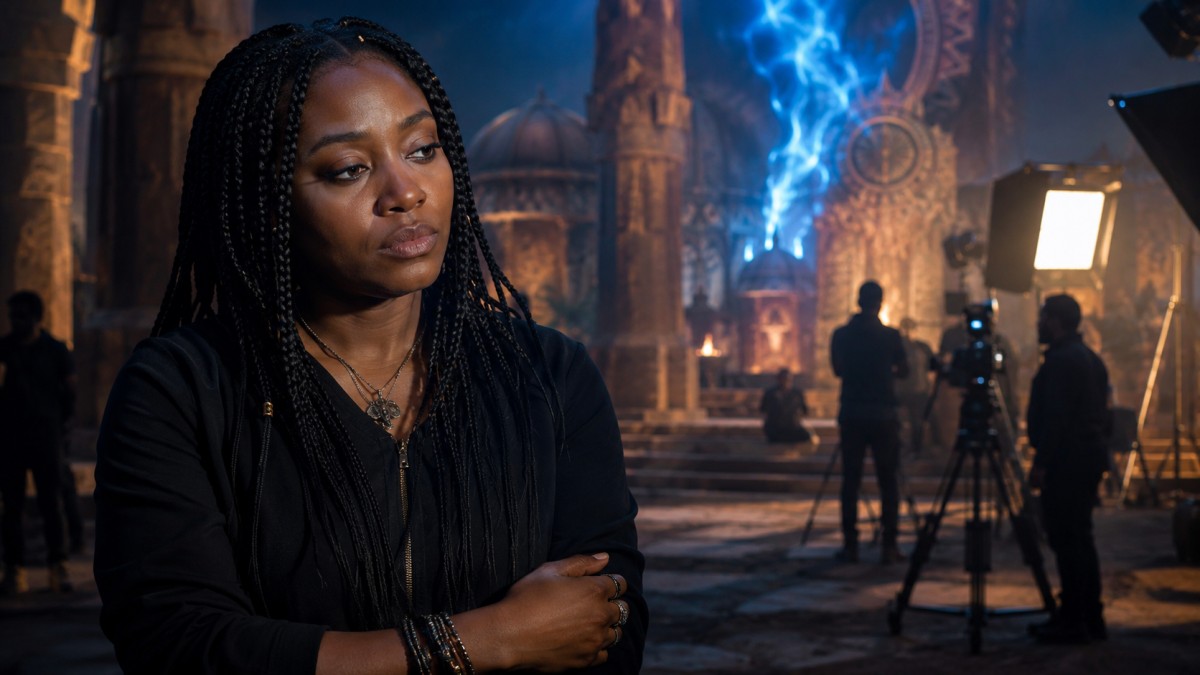
LOS ANGELES — Bestselling fantasy author Tomi Adeyemi has shared an emotional account of her experience working on the film adaptation of Children of Blood and Bone, describing the production as one of the most painful chapters of her career.
In a candid video shared on social media, Adeyemi said the project had caused her significant emotional distress and revealed that she has no desire to revisit the experience once the film is released. Her remarks have sparked widespread discussion among readers, film fans, and the publishing community about the challenges authors can face when their work is adapted for the big screen.
Author Says Behind-the-Scenes Experience Was Deeply Painful
Adeyemi explained that the difficulties she experienced were not recent developments but had been ongoing for well over a year. According to the author, senior figures connected to the production had already been made aware of her concerns, yet she felt the situation never improved.
Without naming specific individuals or detailing the events that led to her frustration, Adeyemi said she reached a point where remaining silent became more difficult than speaking publicly.
She described feeling emotionally exhausted and said she had hoped the issues would remain behind closed doors. However, as promotional efforts for the movie intensified, she believed audiences deserved to understand why she had distanced herself from the adaptation.
A Personal Story That Became a Global Franchise
Children of Blood and Bone launched in 2018 and quickly became one of the most celebrated young adult fantasy novels in recent years. Inspired by West African mythology, the novel introduced readers to a richly imagined world where magic had been stolen and a young heroine fought to restore it.
The book became a bestseller almost immediately after publication, earning critical praise and building a passionate international fanbase. Hollywood soon recognized its potential, leading to the development of a major film adaptation featuring an ensemble cast and a substantial production budget.
For many readers, Adeyemi’s close involvement in developing the screenplay initially suggested that the adaptation would remain faithful to her creative vision.
From Excitement to Disappointment
Despite contributing to the screenplay, Adeyemi indicated that her experience during production left her feeling disconnected from the final project.
She explained that although she worked to improve aspects of the film, the overall experience ultimately became emotionally overwhelming.
Rather than celebrating the release of a movie based on one of her most successful novels, Adeyemi said she now hopes to move forward and focus on future creative work instead.
Her comments highlight a reality that many authors have quietly discussed for years—the transition from publishing to Hollywood can involve significant compromises, creative disagreements, and emotional challenges.
Previous Social Media Activity Raised Questions
Adeyemi’s latest statement follows earlier social media activity that drew attention from fans.
Earlier this month, screenshots shared online appeared to show messages involving actor Amandla Stenberg, who portrays Princess Amari in the upcoming film. The posts suggested a breakdown in communication between the author and the actor, although the exact circumstances remain unclear.
Neither Adeyemi nor Stenberg has publicly explained what happened, leaving fans to speculate. Importantly, Adeyemi’s newest video does not directly accuse any cast member of wrongdoing or provide details about any alleged conflict.
Instead, she focused primarily on describing the emotional impact the production had on her personally.
Casting Conversations Continue
The film has faced public debate before.
When Stenberg was cast as Princess Amari, some readers questioned the decision and raised concerns about colorism, arguing that the character’s appearance in the novel carried important cultural significance.
At the time, Stenberg responded publicly, explaining that the role meant a great deal personally and professionally. The actor emphasized that they carefully considered the cultural discussions surrounding the character and believed the casting was approached thoughtfully.
Although those conversations generated headlines, Adeyemi’s recent statement did not revisit those earlier controversies.
Fans Express Support Online
Following the release of Adeyemi’s video, readers flooded social media with messages of encouragement.
Many fans praised her willingness to discuss the emotional realities behind adapting bestselling novels into major studio productions. Others expressed sadness that a project they had anticipated for years had become associated with such painful memories for its creator.
Some readers also noted that an author’s involvement in writing a screenplay does not necessarily guarantee creative control during filmmaking, particularly on large studio productions involving numerous producers, executives, and creative teams.
A Reminder About Creative Ownership
Hollywood adaptations frequently require collaboration among directors, producers, screenwriters, actors, and studio executives. While many authors enjoy positive experiences, others have spoken openly about feeling disconnected from the final version of stories they originally created.
Adeyemi’s remarks have reignited conversations about how much influence original authors should retain throughout the filmmaking process, particularly when adapting culturally significant stories with devoted fan communities.
Her decision to speak publicly also reflects a growing trend of creators using social media to share personal experiences that might otherwise remain private.
Looking Beyond the Film
Despite the controversy surrounding the adaptation, Adeyemi made it clear that she wants to move forward.
Rather than continuing public discussions about the production or the people involved, she said her focus is shifting toward future writing projects and connecting with readers through new books.
Her comments suggest she hopes the conversation will eventually center once again on her work as a novelist rather than the challenges surrounding the film adaptation.
As anticipation for Children of Blood and Bone continues to build ahead of its theatrical release, audiences will likely remain interested in both the movie itself and the broader discussion it has sparked about authorship, creative collaboration, and the emotional cost that can accompany bringing beloved stories from page to screen.
Disclaimer: This article is based on publicly available statements and reports. It is intended for informational purposes only and does not represent verified facts about private events or allegations beyond what has been publicly shared.